Custom Makeup Remover Refill Spout Pouch
Makeup remover is not drunk and it is not sprayed — it is poured onto a cotton pad, a little at a time, by someone who is about to touch their eye. That single use decides the bore, the cap and how the front of the pouch should be printed.
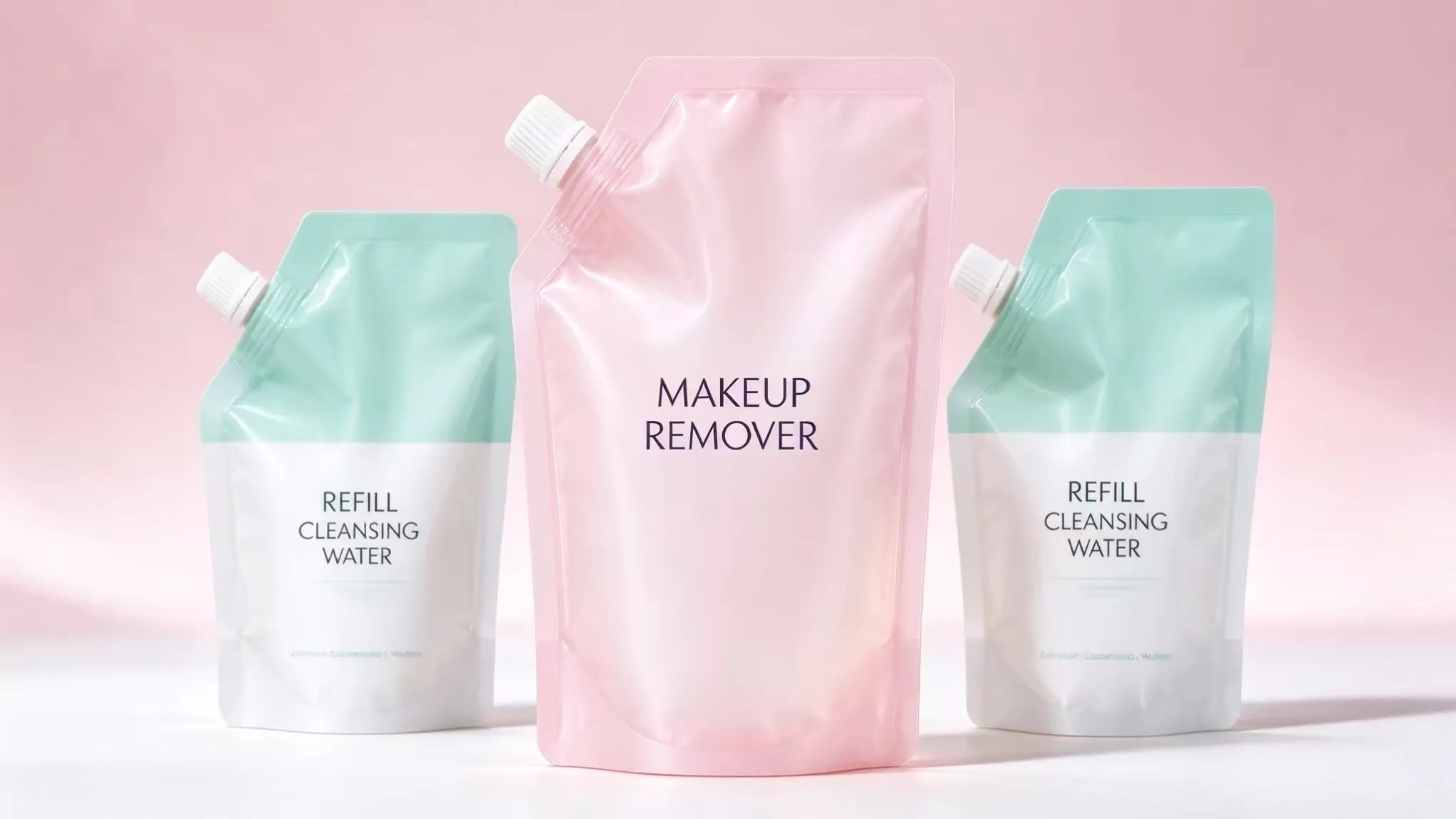
These are refill spout pouches from 100 ml to 500 ml, with 30–50 ml travel sizes, for micellar water and oil-based removers. Bulk MOQ is 50,000 pcs per size, with a 1,000-pc trial.
Watery and oily are two different packs
A micellar water is mostly water with a surfactant, so it needs little more than a PET/PE structure and a clean seal. An oil-based or bi-phase remover attacks the wrong film: the oil migrates into the sealant layer, the seal softens, and the failure appears as a slow weep at the spout rather than a burst.
So the structure follows the formula, not the price. If the range includes both, they are two packs, and testing one does not clear the other.
Bi-phase product wants to be seen
A two-layer remover is the one cosmetic formula where the product itself is the artwork: oil on top, water below, shaken before use. A clear panel on the front says that better than any graphic.
The trade is the same as on any windowed pack — less barrier in that area and a shelf-life figure that has to be honest about it. On a 500 ml refill used within weeks it is rarely a problem; on a product that sits in a warehouse for a year it is.
The bore decides whether the user wastes product
Remover goes onto a pad, not into the hand, and a wide opening pours far more than a pad can hold. The excess runs off the pad onto the bathroom floor, and the customer reads it as a badly designed pack rather than as their own over-pour.
A narrow bore with a controlled flow is the version that gets used properly. But a bore that is too narrow is just as bad in the other direction — the user shakes the pouch, and shaking a surfactant solution produces foam that then sits in the spout.
A refill has to survive being refilled
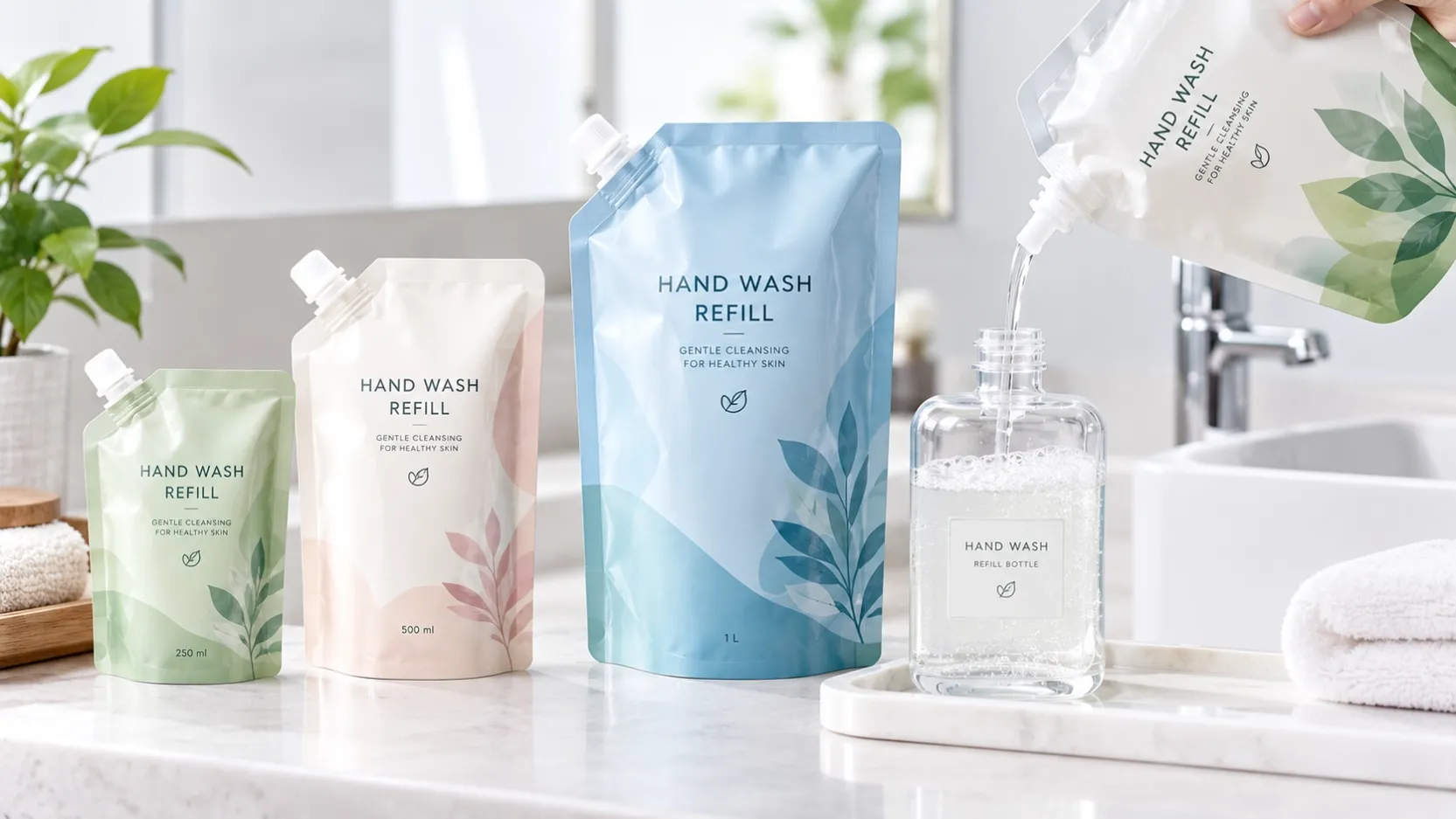
The refill version is opened, poured into a bottle, and put away half-empty on a wet shelf. That is a harder life than a retail pack: the cap is opened repeatedly, the pouch is squeezed to empty it, and it stands in a puddle.
Practical implications: a screw cap rather than a flip cap once the size passes about 200 ml, a gusset that still stands when two-thirds empty, and a print that expects to get wet. The full list of leak points is in spout pouch leakage prevention.
MOQ and the first run
Bulk MOQ is 50,000 pcs per size, and each capacity counts separately — a 200 ml refill and a 500 ml refill in one artwork are two minimums. A 1,000-pc trial is available and is the right place to test the seal against an oil formula.
Stock samples ship free; printed samples take 7–10 days, and production runs 15–20 days after deposit and artwork approval.
What to send for a quotation
- the formula type: micellar, oil-based, bi-phase or cleansing lotion
- fill volume, and whether the pack is retail or a refill for a bottle
- narrow bore for a pad, or wide bore for pouring into a bottle
- whether the front needs a clear panel
The wider range of formats is on skincare refill spout pouches.
FAQ
Can the same pouch hold micellar water and an oil remover?
Not safely. Watery formulas run in PET/PE; oil-based ones need a structure that resists oil migration into the sealant. Testing one does not qualify the other.
Which cap suits a refill pouch?
A screw cap once the pack is above roughly 200 ml, because it is opened repeatedly and has to seal against a wet rim. Flip caps work on travel sizes where the pack is used up quickly.
Why does my remover foam at the spout?
Usually a bore that is too narrow. The user shakes the pouch to move the product, a surfactant solution foams, and the foam sits in the opening instead of flowing.
Get a quotation
Send the formula type and the fill volume, and the reply names the structure, the bore and the cap rather than a price range. Send your specification.