Custom Hand Cream Spout Pouch
Hand cream does not pour. It is extruded — the pack is squeezed and the product comes out as a ribbon, which makes this a tube replacement rather than a bottle replacement. Everything that goes wrong with a cream pouch comes back to that one fact.
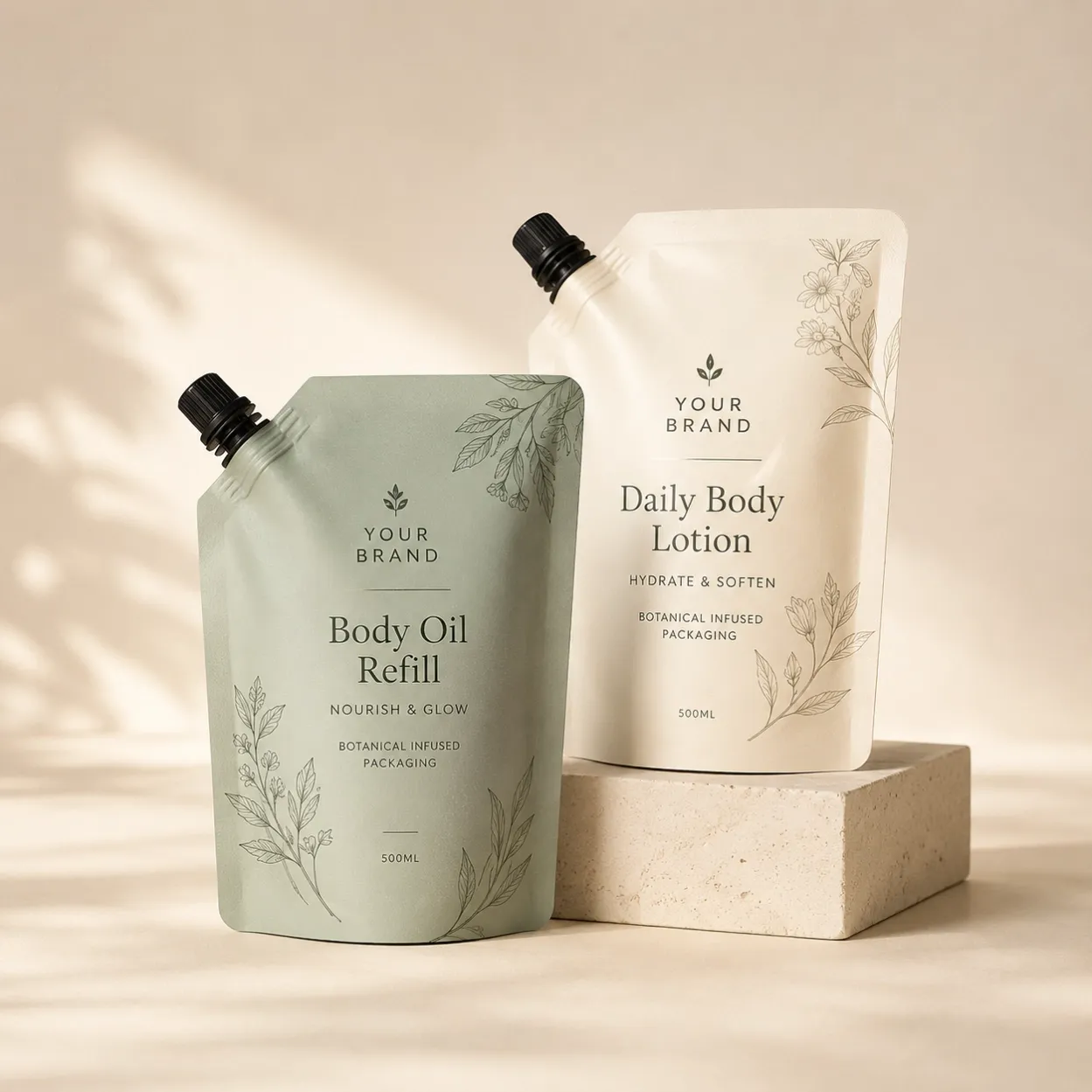
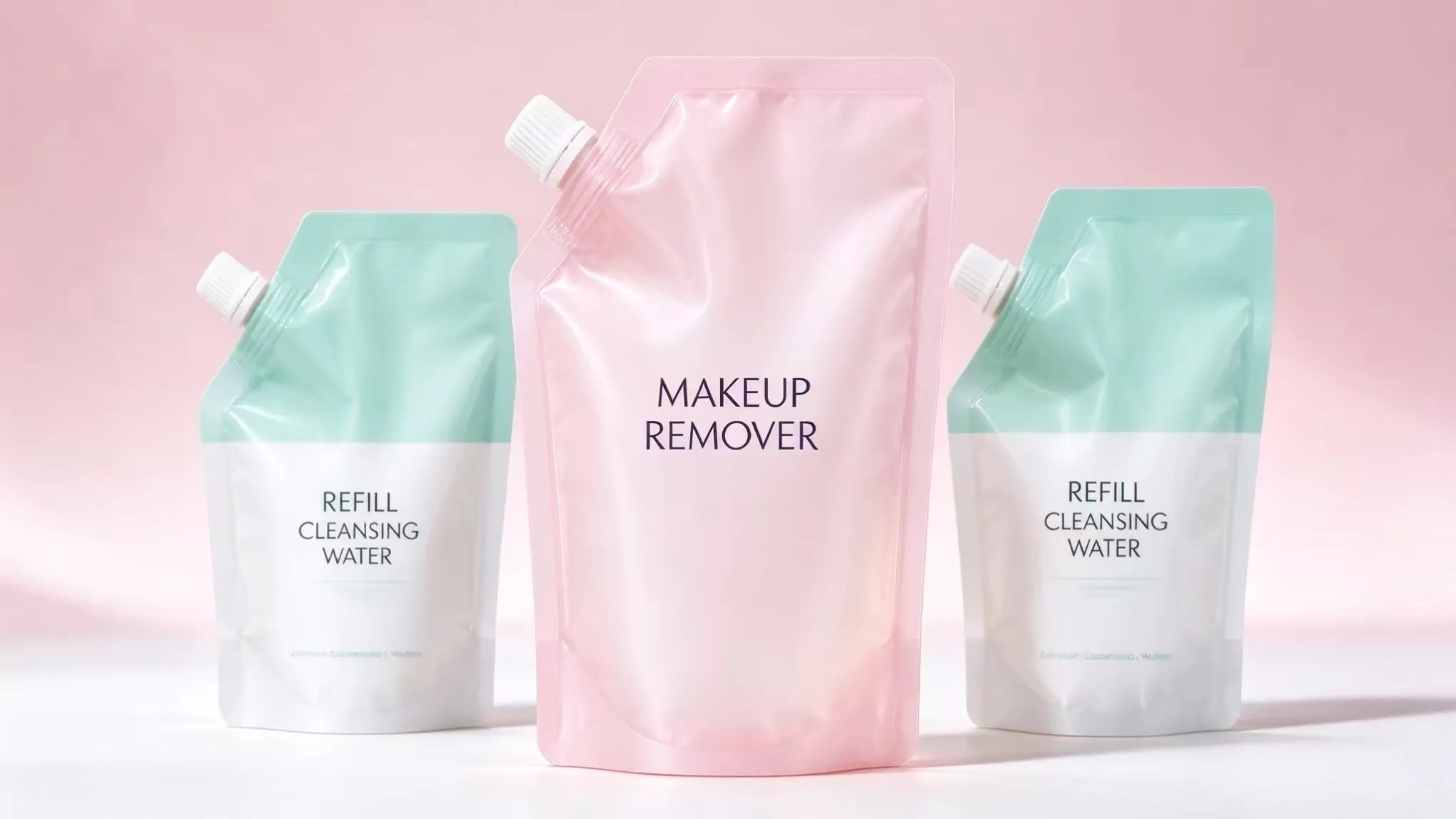
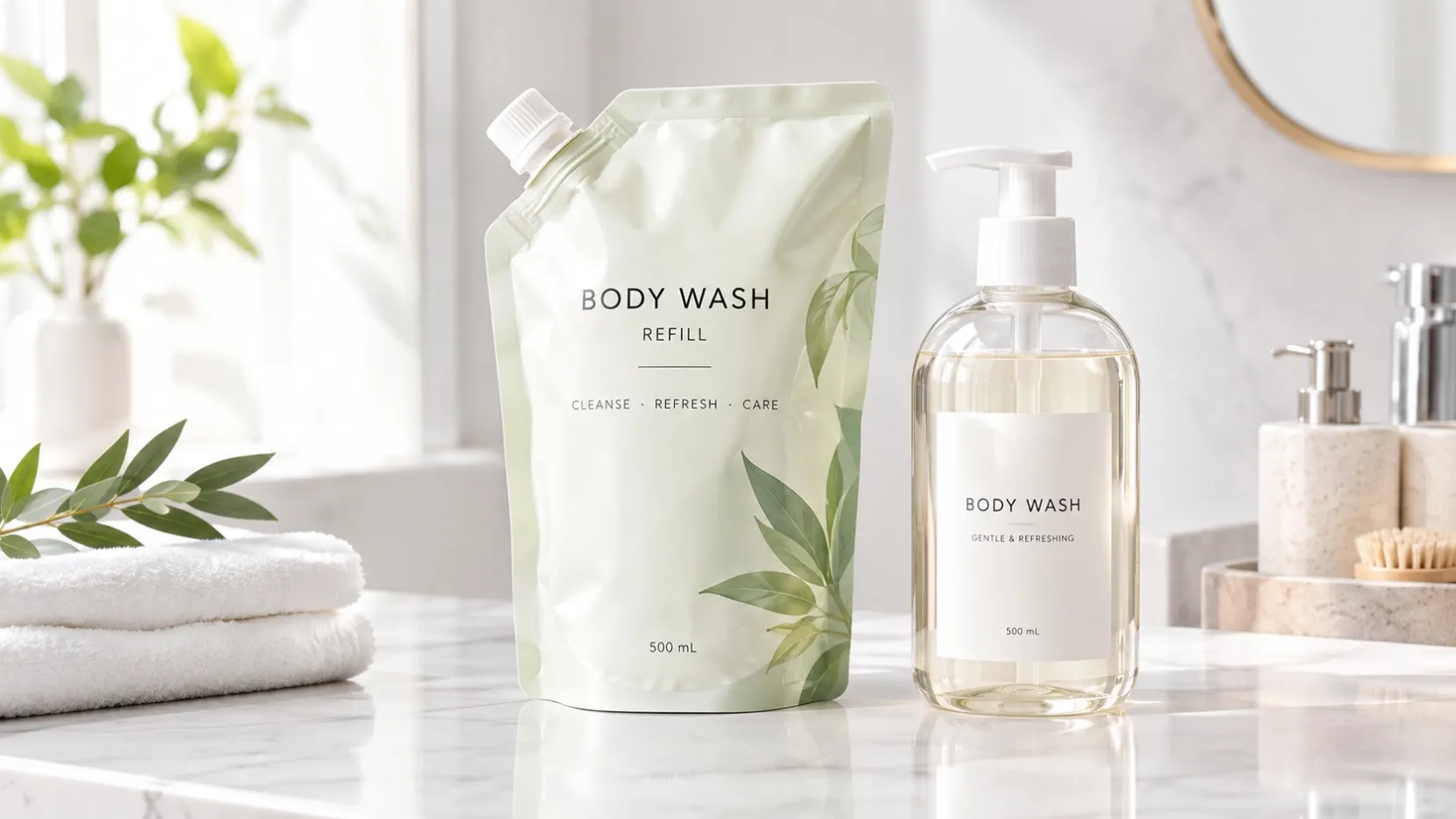
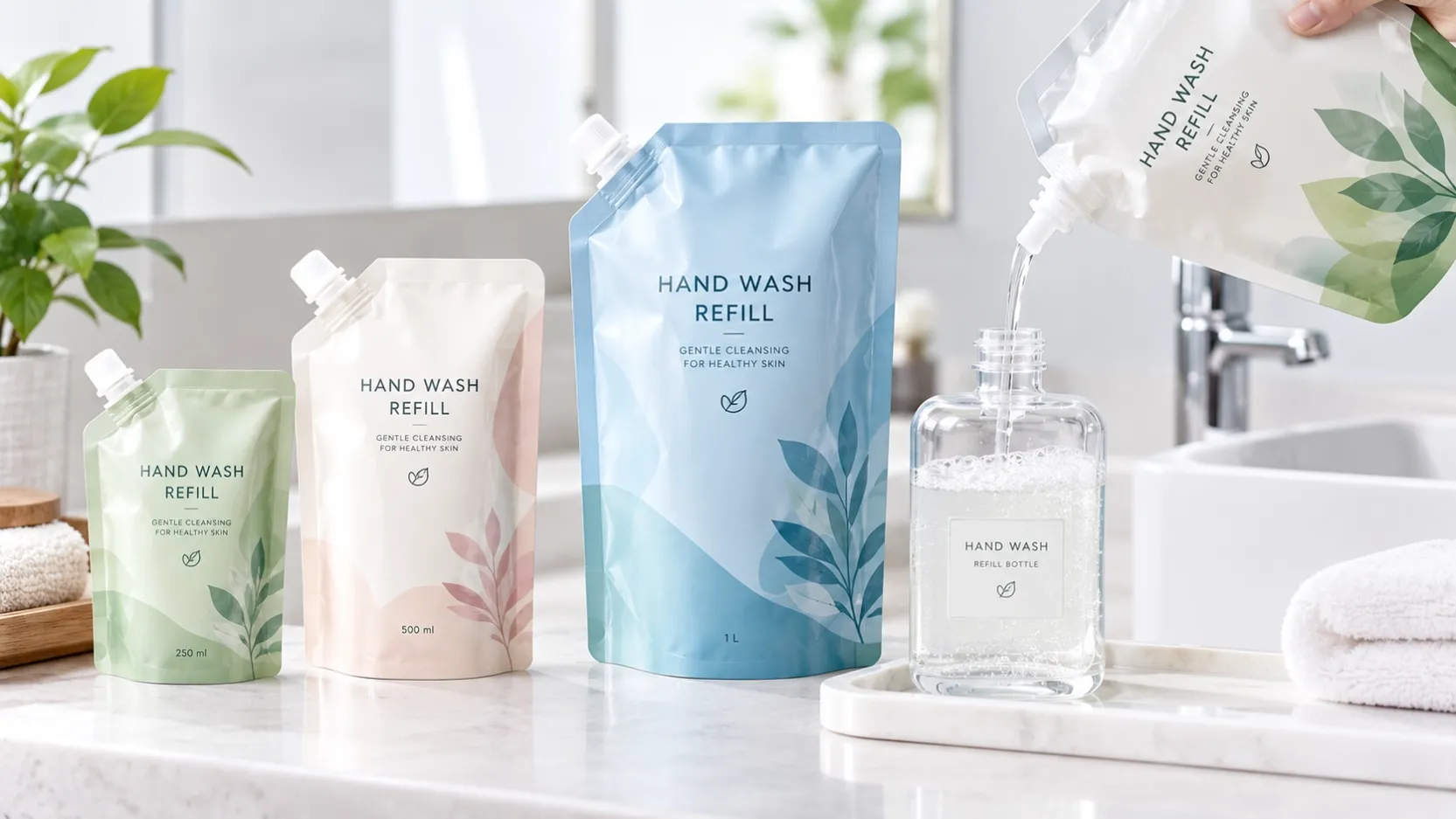
These are stand-up spout pouches from 30 ml to 200 ml for hand cream, foot cream and daily moisturiser. Bulk MOQ is 50,000 pcs per size, with a 1,000-pc trial.
It has to be squeezed, so the body has to be soft
A cream pouch that is too stiff will not give the ribbon the user expects, and one that is too soft will deliver a blob. The feel is set by the laminate and the fill level: a pouch filled to the top with no headspace is hard to start, and one with too much air collapses as it empties.
This is also the reason cream pouches are usually wider and flatter than a drink pouch. A narrow body means the hand squeezes the middle and the cream goes nowhere near the spout.
The last ten per cent is where refills get criticised
Cream clings. It does not slide down the film the way a liquid does, so the bottom corners of a stand-up pouch keep a residue that the user can see and cannot reach. A flat-bottom design with the spout on the top edge, and a fill level that keeps the cream near the opening, is the version that gets used to the end.
This is the single most common complaint on cream pouches, and it is a design decision rather than a materials one.
The cap is chosen with cream on the fingers
Hand cream is applied with both hands, which means the pack has to be closed by someone whose fingers are already slippery. A screw cap that needs two turns is the wrong answer at that moment; a flip cap that snaps shut one-handed is the right one.
The same logic applies to reopening it: a flip cap can be lifted with a thumb, and a screw cap on a 30 ml travel size is usually lost in a bag before the cream is finished.
A bathroom is a hard place for print
A pouch on a sink gets wet, wiped, and put down on a damp surface. Heavy ink coverage on the lower half wears first, and matt and soft-touch finishes mark more visibly than gloss when they are handled with cream on the fingers.
Two practical choices: keep the dense colour on the upper half and let the base carry a tint, and choose a finish the brand can live with after a month on a sink — soft-touch is the nicest in the hand and the least forgiving of a wet shelf.
MOQ and the first run
Bulk MOQ is 50,000 pcs per size, and each capacity counts separately — 30 ml and 200 ml in one artwork are two minimums. A 1,000-pc trial is available, and on a cream it is worth doing: the squeeze feel and the residue at the end are the two things a drawing cannot show.
Stock samples ship free; printed samples take 7–10 days, and production runs 15–20 days after deposit and artwork approval.
What to send for a quotation
- fill volume, and whether the pack is for retail or a hotel and travel kit
- the viscosity, and whether the cream is a ribbon or a soft gel
- flip cap or screw cap
- finish, and how much of the face is solid colour
The travel-size version of this format is on travel size skincare pouches, and cap options in spout pouch with cap guide.
FAQ
Will a pouch work for a thick cream?
Yes, and it is the common format for cream. What matters is a soft enough body and a bore large enough to let the cream out as a ribbon rather than forcing it through a narrow opening.
Flip cap or screw cap for hand cream?
Flip cap, because the pack is closed with cream on the fingers. A screw cap is only reasonable on a large retail size where the pack stays on a shelf and is not carried around.
Why does cream stay in the corners?
Because cream does not flow. A flat-bottom pouch with the spout on the top edge and a generous gusset uses more of the fill; a narrow pouch leaves residue at the base that the user can see.
Get a quotation
Send the fill volume, the viscosity and the finish, and the reply names the laminate, the bore and the cap rather than a price range. Send your specification.