Sep 20, 2026Functional & Specialty Packaging
How to Prevent Spout Pouch Leakage: A Guide to Seals, Spouts & Testing
Learn how to reduce spout pouch leakage by selecting suitable materials, seals, spouts and caps, and testing packaging before mass production.
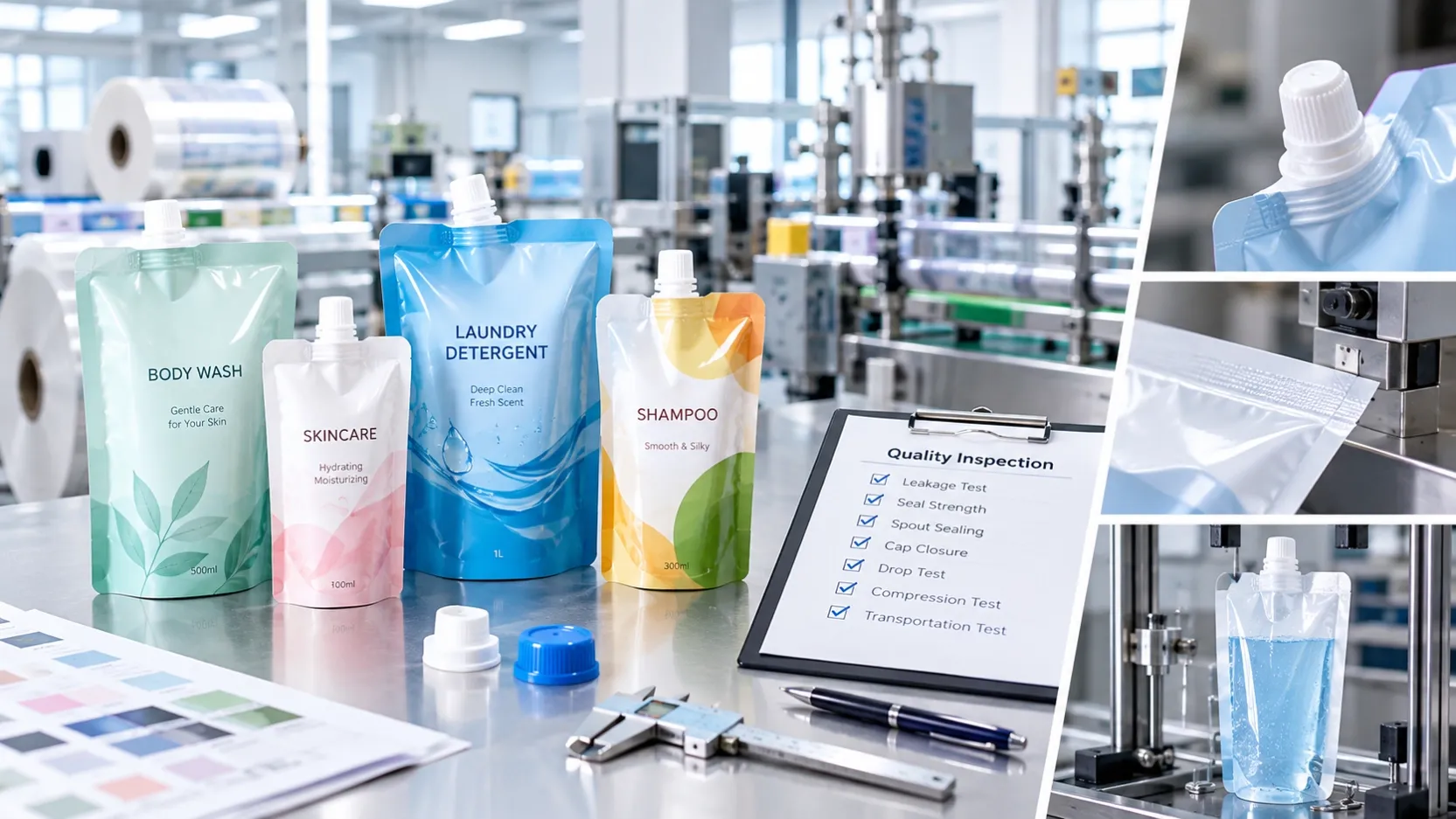
How to Prevent Spout Pouch Leakage: A Guide to Seals, Spouts & Testing
Spout pouch leakage is one of the most important concerns for brands packaging liquids, gels and semi-liquid products.
Leakage can occur because of the pouch film, heat seals, spout-to-pouch connection, cap, filling process or transportation conditions.
Choosing the right pouch structure and testing the finished package before mass production can help reduce packaging risks.
1. What Causes Spout Pouch Leakage?
Spout pouch leakage can come from several areas of the package.
Common risk points include:
- Heat-sealed pouch edges
- Spout-to-film sealing area
- Cap and spout connection
- Pouch corners and bottom seals
- Film damage or pinholes
- Excessive pressure during filling
- Impact or compression during transportation
The risk can also change depending on the product formula, viscosity, filling temperature and package size.
For this reason, leakage prevention should be considered during pouch design rather than only after production.
2. Choose the Right Pouch Material
The film structure should match the product and its protection requirements.
Common structures include PET/PE, PET/AL/PE, PET/AL/PA/PE and other customized laminated films.
Material selection may depend on:
- Product formula
- Product viscosity
- Oxygen and moisture barrier requirements
- Light protection
- Mechanical strength
- Shelf-life requirements
- Transportation conditions
For example, a high-barrier structure may be more suitable for products that require additional protection from light or oxygen.
For more information, see our Spout Pouch Material Guide:
3. Pay Attention to the Spout-to-Pouch Seal
The spout is one of the most important parts of a spout pouch.
A pouch can have a strong film structure but still leak if the spout connection is not properly designed or sealed.
Before production, brands should confirm:
- Spout diameter
- Spout position
- Spout material
- Spout-to-film compatibility
- Welding and sealing requirements
- Cap fit
- Product dispensing requirements
The final spout configuration should be evaluated together with the pouch material and filling process.
For more information about closure options, see:
4. Use a Closure That Matches the Product
The cap should provide secure closure while allowing convenient dispensing.
Screw caps are commonly used for refill products and liquids that require repeated opening and closing.
Flip caps may be suitable when quick opening and frequent dispensing are important.
The choice should also consider product viscosity and how the customer will use the pouch.
For thicker products such as lotion, shampoo, body wash or sauces, the spout opening should be evaluated with the actual formula to ensure smooth dispensing without creating unnecessary pressure on the package.
5. Check the Filling Process
Leakage problems do not always come from the pouch itself.
The filling process can also affect package integrity.
Before mass production, brands should confirm:
- Filling volume
- Product viscosity
- Filling temperature
- Filling speed
- Filling equipment
- Spout filling method
- Sealing conditions
- Product weight
The pouch should be tested under conditions that are reasonably close to actual production.
If the pouch is overfilled or exposed to excessive pressure during filling, the seals and spout connection may experience additional stress.
6. Test the Finished Pouch Before Bulk Production
Sample testing is an important step before placing a large production order.
Depending on the product and application, testing may include:
- Seal strength testing
- Spout sealing inspection
- Cap fit and closure testing
- Filled-pouch leakage testing
- Drop testing
- Compression testing
- Transportation simulation
- Product compatibility testing
The actual product formula should be used whenever practical because different liquids and semi-liquid products can behave differently inside the package.
A pouch that performs well with water, for example, should not automatically be considered suitable for detergent, shampoo, lotion or sauce without appropriate evaluation.
7. Consider Transportation and Storage
A pouch may pass a basic leakage check but still experience problems during shipping.
Transportation can expose filled pouches to:
- Compression
- Drops and impacts
- Vibration
- Temperature changes
- Carton pressure
- Repeated movement
Larger pouches and heavier filling volumes may require additional attention to film strength, seal design and package structure.
The final packaging should therefore be evaluated under realistic storage and transportation conditions.
For refill products, the relationship between pouch size, product weight and dispensing method should also be considered.
8. What Should Buyers Confirm With a Spout Pouch Manufacturer?
Before requesting a quotation, prepare as much information as possible.
A useful specification includes:
- Product type
- Product viscosity
- Filling volume
- Pouch dimensions
- Material requirements
- Spout diameter
- Spout position
- Cap type
- Filling method
- Filling temperature
- Printing requirements
- Estimated order quantity
- Shipping and storage conditions
Providing these details allows the manufacturer to evaluate the pouch structure, spout configuration and testing requirements more accurately.
You can also review our guide on choosing a spout pouch manufacturer:
9. Design the Pouch for Leakage Resistance From the Start
Leakage prevention should be part of the complete packaging design.
The pouch material, dimensions, seal structure, spout, cap, filling process and transportation conditions should work together.
A suitable packaging solution should balance:
- Product protection
- Leak resistance
- Dispensing performance
- Package strength
- Branding
- Production requirements
- Transportation efficiency
For brands developing a new pouch, testing samples before mass production can help identify potential problems early.
For custom pouch design guidance, see:
10. Request a Custom Spout Pouch Solution
Every liquid product has different packaging requirements.
If you are developing a cosmetic, personal care, hair care, household, baby care or food product, the pouch should be designed around the actual formula, filling volume, dispensing method and distribution conditions.
Grace Beauty Pack provides custom spout pouch solutions with customized materials, sizes, spouts, caps and printing.
Send us your product type, filling volume, desired pouch size and estimated order quantity to discuss a suitable packaging solution.
Request a custom spout pouch quotation: