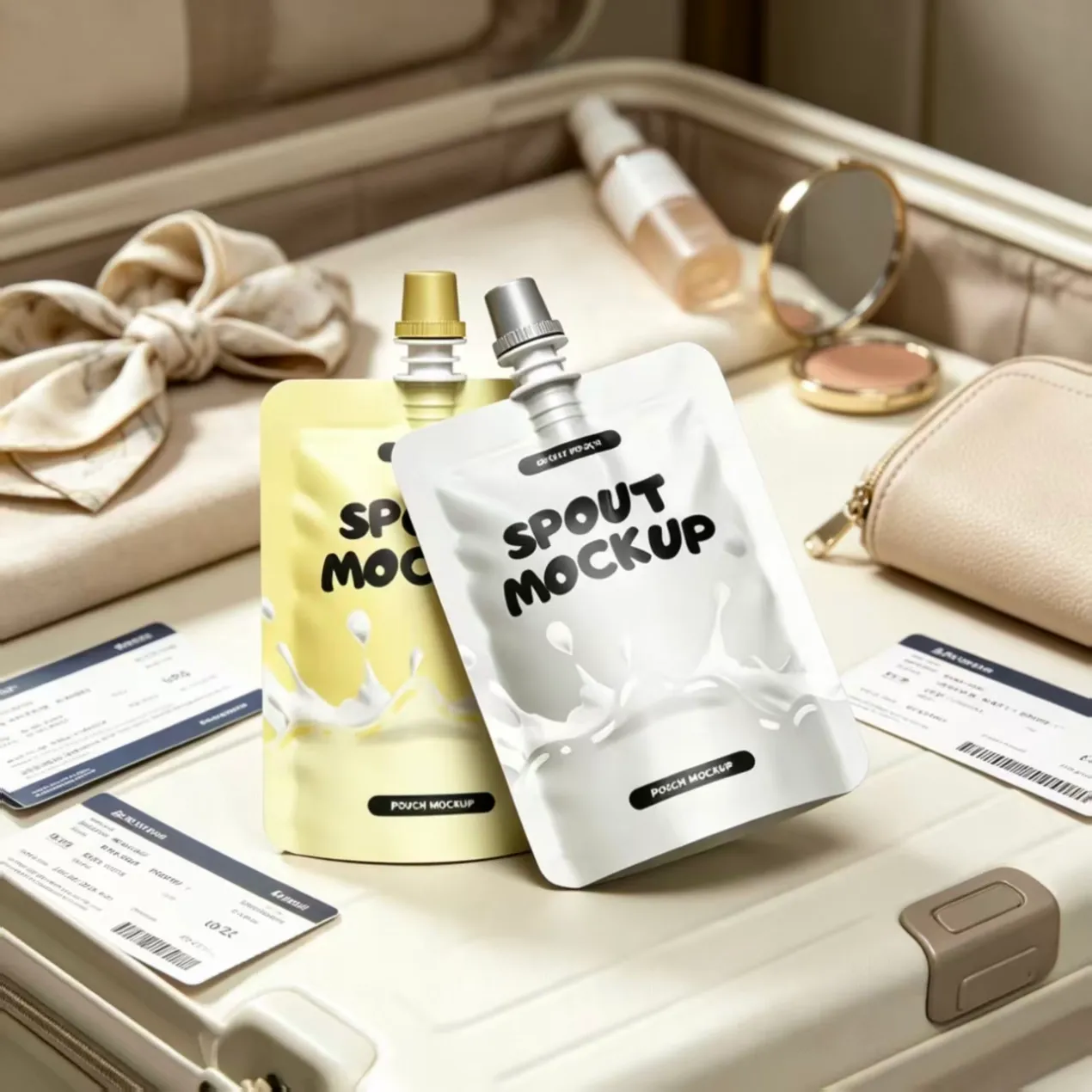
A travel size is not a small version of a retail pack. It has to survive a security tray, a toiletry bag and a hotel bathroom, and it is usually judged before anyone reads a word on it — the customer is holding it at arm's length in a queue.
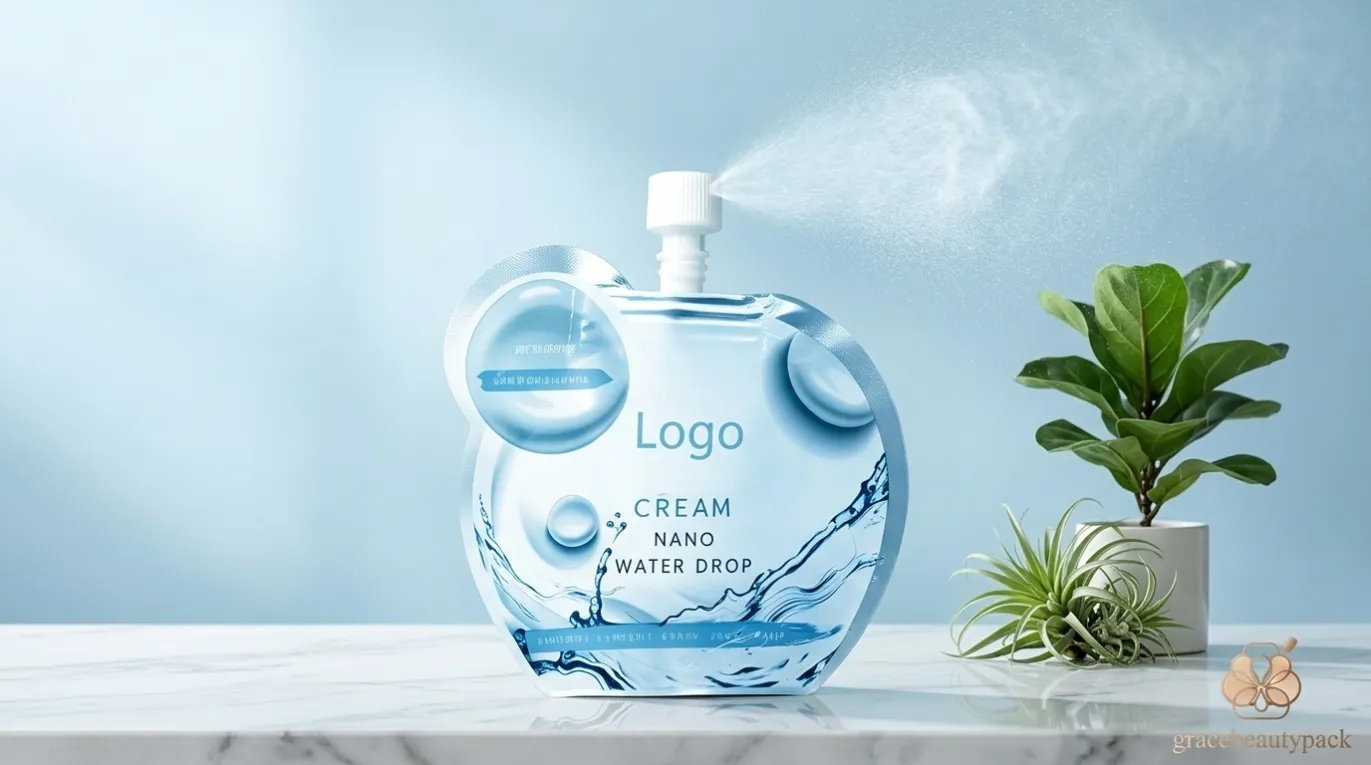
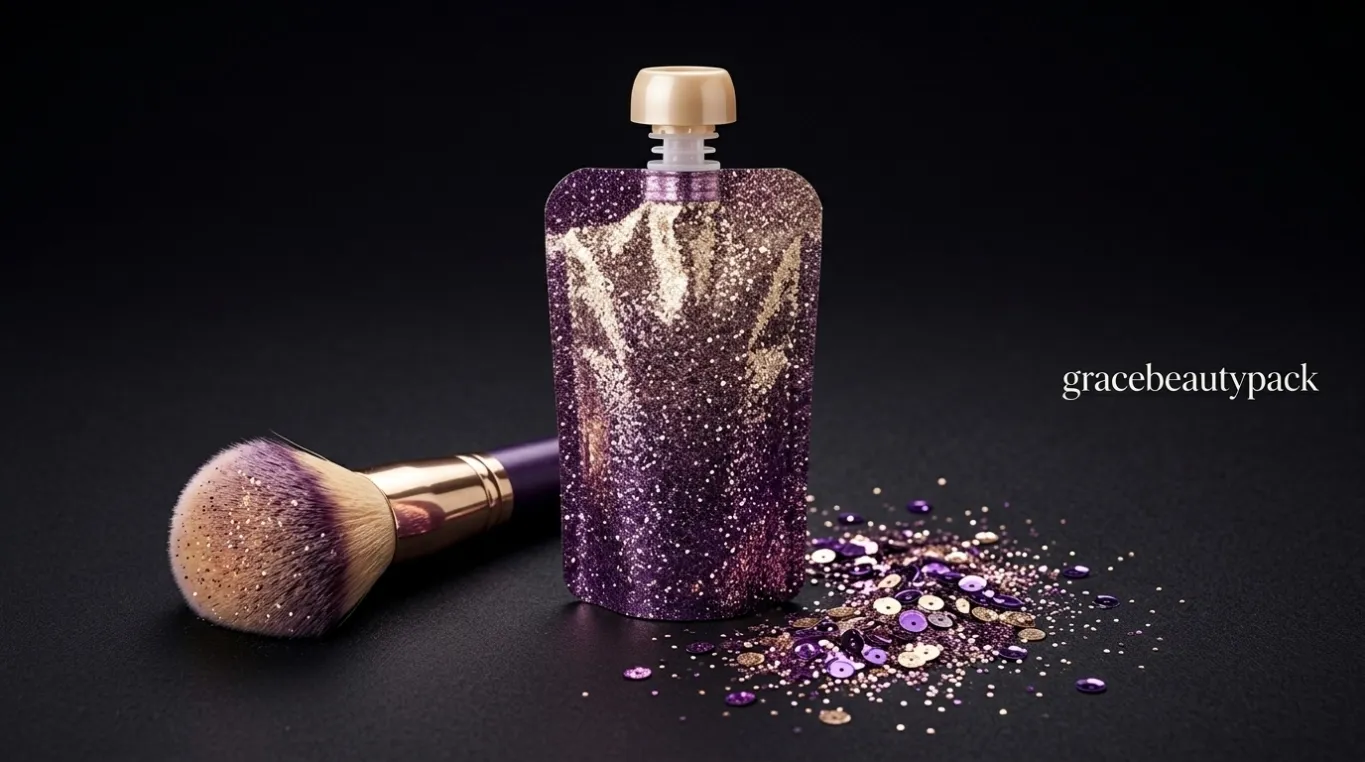
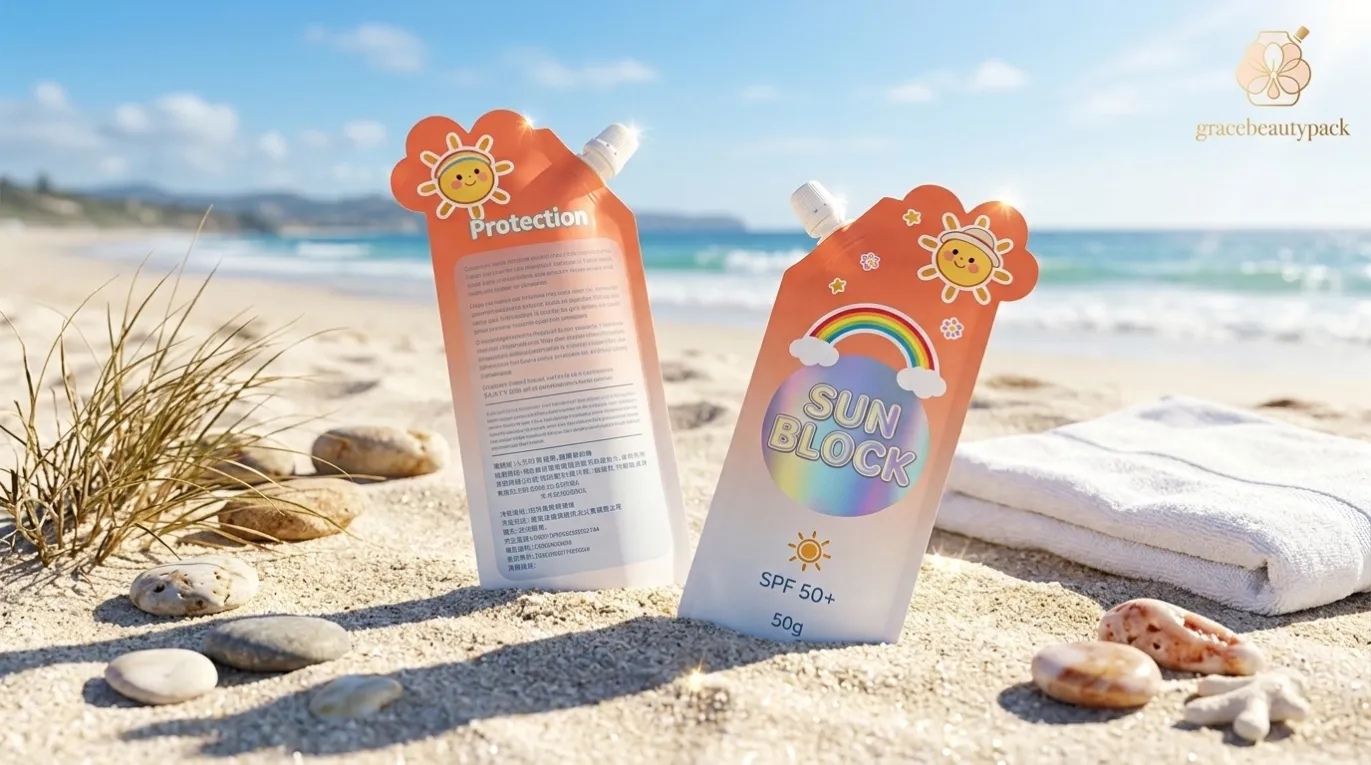
These are stand-up spout pouches from 30 ml to 100 ml, printed with your artwork, for travel kits, hotel amenities, sample sets and airline-friendly retail. Bulk MOQ is 50,000 pcs per size, with a 1,000-pc trial.
The 100 ml line is the first constraint
Most airports apply a 100 ml limit per container for liquids in carry-on baggage, so a travel SKU that wants to fly has to sit at or under that number — and the number has to be the fill volume, not the nominal one.
This is where small formats get difficult. At 100 ml, a 2 ml fill variance is two percent of the pack. At 30 ml, the same variance is nearly seven, which is enough to push a legal claim over the limit or leave a pouch looking under-filled on shelf. Decide the declared volume with the fill tolerance in mind, and state it on the front of the pack where a security officer can read it.
Small pouches, small print area
A 50 ml face is mostly seal zone. The top seal, the bottom gusset fold and the spout boss take their share before any design starts, and what is left has to carry the brand, the volume and often a legal line.
Two consequences. Type gets small: check the minimum size at final print width rather than on a screen mock-up, because a line that reads at 12 pt in a flat file can fill in on film — the artwork requirements are worth reading before the file is final. And the design has to be simpler: one strong element beats four, and a mark that is legible on a 500 ml pouch is not automatically legible at a fifth of the width.
What the pack has to do in a bathroom
A travel pouch is used with one hand, wet, in a space the size of a shoebox. That rules out most screw caps — they get lost on the first night — and it favours a flip cap that opens with a thumbnail and closes without being looked at.
The spout should be small in bore as well as in diameter, because a thin toner or micellar water leaves a small pouch fast. A narrow bore turns a pour into a controlled squeeze, which is the whole point at this size.
Filling small volumes
Small volumes are less forgiving than large ones. The same filling head that holds tolerance on a 500 ml pouch can drift outside it on a 50 ml one, because every millilitre is a larger share of the target.
Practically: expect the fill tolerance to be quoted as a percentage rather than a fixed volume, and check the first production sample by weighing rather than by eye. If your formula is expensive, that tolerance is also a cost line, not only a quality one.
MOQ, samples and the first run
Bulk MOQ is 50,000 pcs per size across the travel range, and each capacity counts as its own size — a 50 ml and a 100 ml in the same print are two minimums. A 1,000-pc trial is available for a first market test.
Stock samples ship free so you can check the format in hand before committing. Printed samples take 7–10 days, and production runs 15–20 days from artwork approval and deposit.
What to send for a quotation
- the volume you want to declare, and whether it has to clear airport security
- the formula: water-thin toner, serum, cream
- how the pack reaches the customer — kit, hotel room, retail shelf
- artwork status, and whether a legal line has to sit on the front
- destination market, if the pack carries a recycling claim
FAQ
Will a 100 ml pouch pass airport security?
The container limit is about volume, so a pouch declared at 100 ml or under is treated like any other container of that size — it still goes in the clear bag with everything else. Print the volume clearly on the front; an unmarked container is the one that gets questioned.
Is 30 ml worth producing?
It is if the product is a serum or a concentrate where a little goes a long way. It is not if the product is a body wash, where 30 ml is one shower and the customer feels short-changed. The format should follow the dose, not the trend.
Can the same artwork run across the whole travel range?
Usually yes, with one adjustment: the mark is scaled to the smallest pouch, not the largest, and the legal copy is re-set per size. Trying to keep one fixed layout across a 30 ml and a 100 ml is what produces the unreadable back panel.
Get a quotation
Send the declared volume, the formula and the market, and you get a pouch and a bore rather than a range. Send your specification and we will reply with the structure and the print route in one message.