Custom Spout Pouch Guide
Skincare Refill Packaging: A Brand's Guide to Refill Pouches
Which skincare products suit a refill pouch, why brands add one SKU before a range, and the five steps from sample to first production run.
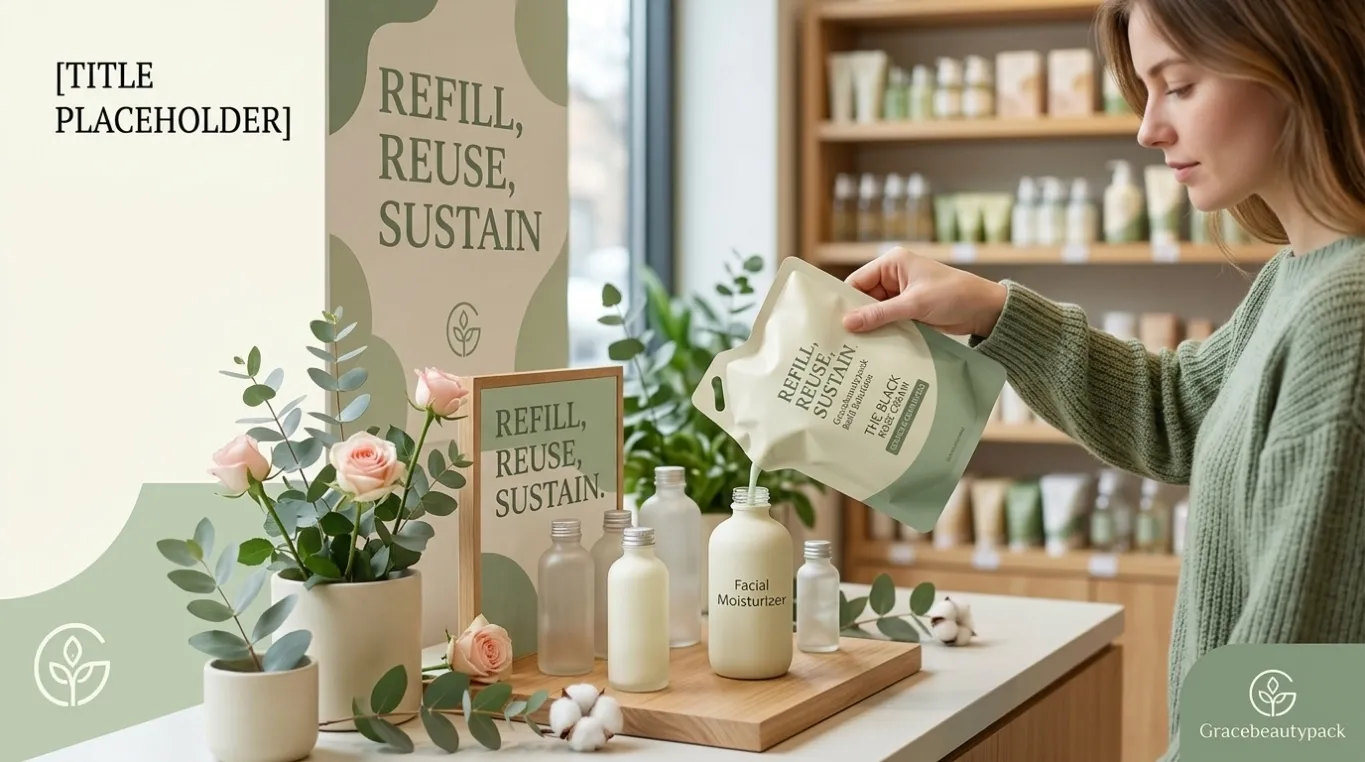
Skincare Refill Packaging
Skincare refill packaging puts a liquid or semi-liquid product in a pouch that the customer decants into the pack they already own. It is the format most refill programmes start with.
Which products suit it
Serum, essence, lotion, toner, facial cleanser, moisturiser, cream, micellar water and body care — anything sold repeatedly and poured rather than scooped.
A thick cream and a thin toner do not take the same spout, so the product, the fill volume and the viscosity should reach the supplier together.
Why brands add a refill
A refill pouch is lighter than a bottle, and it gives an existing customer a reason to buy the same product again without buying another bottle and pump.
Most brands launch one established product first, see how customers handle the refill, and extend the range afterwards.
From sample to first run
- Pick one established SKU.
- Confirm the fill volume and the viscosity.
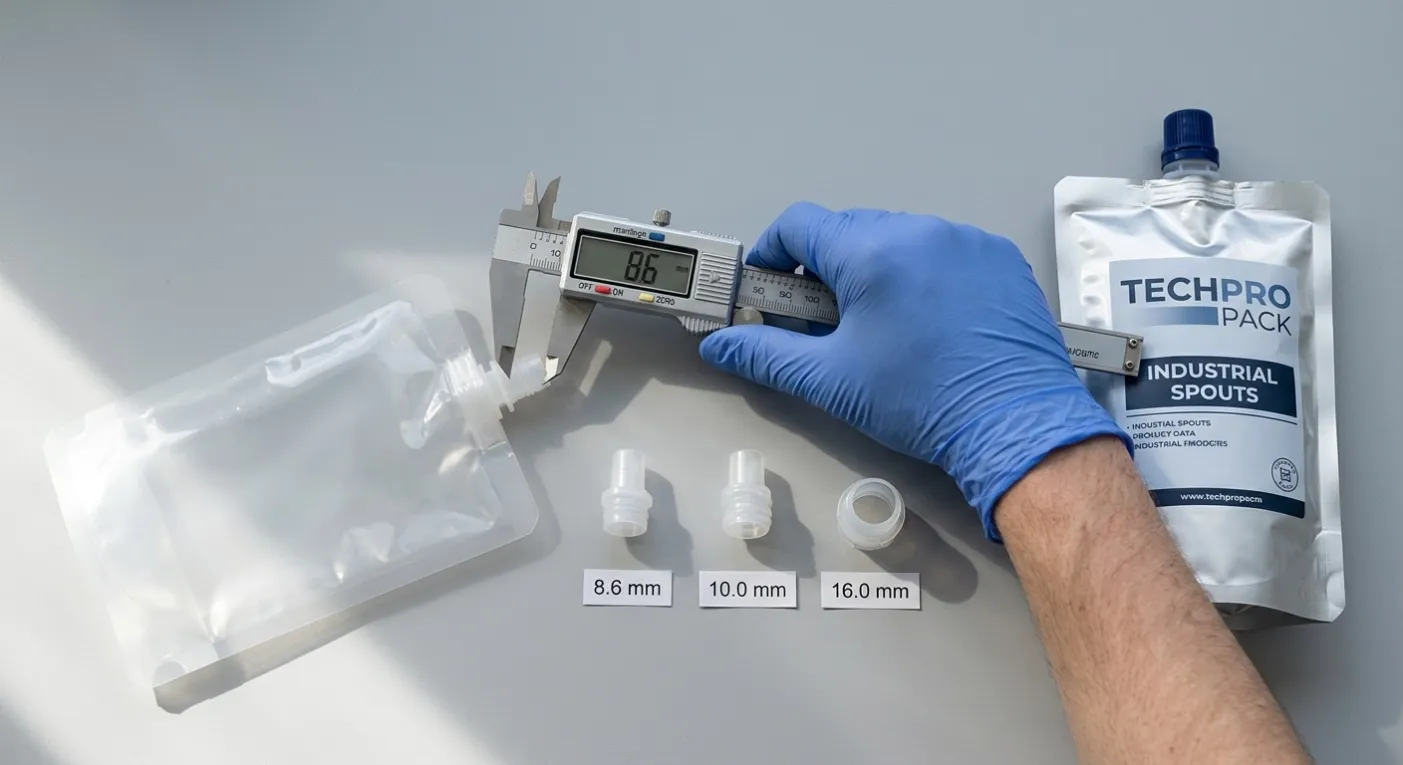
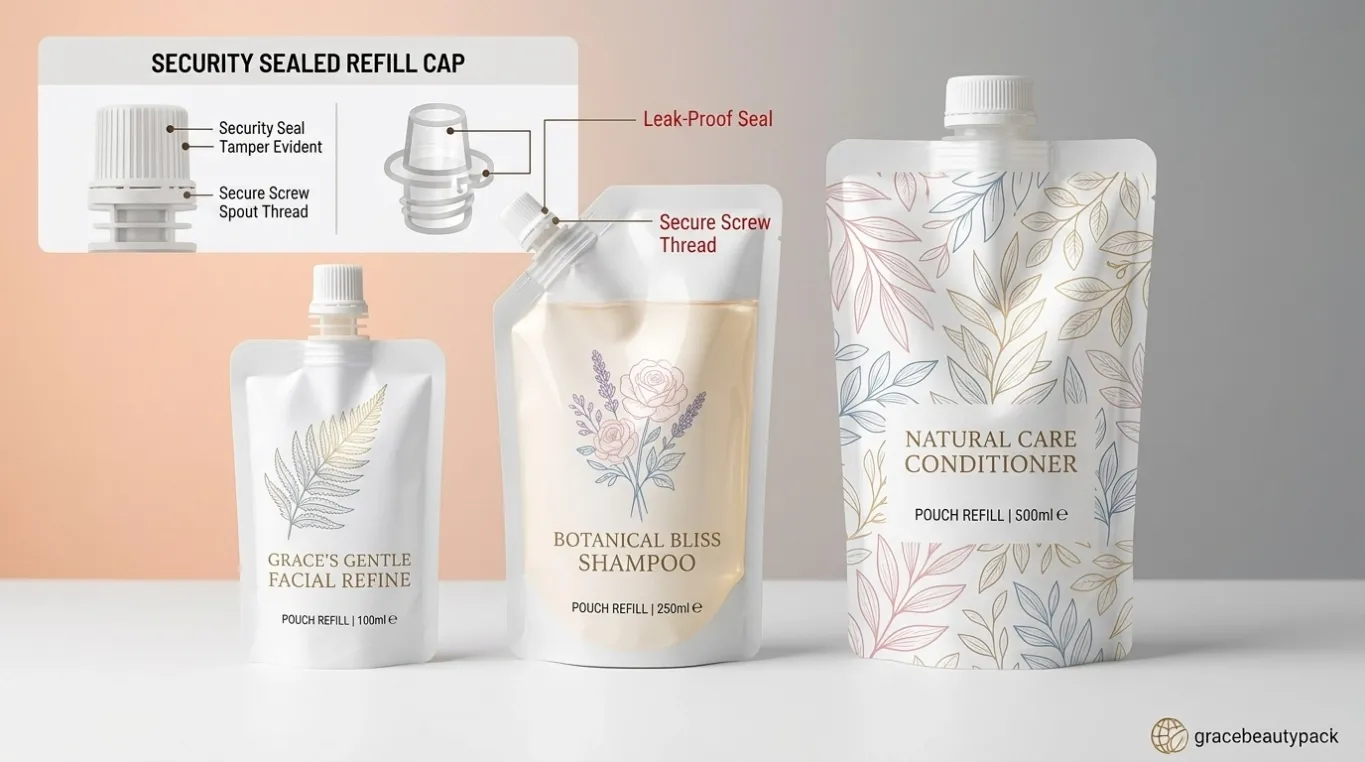
- Choose pouch size, film and closure — spout pouch with cap covers the closure options.
- Fill a sample with the actual formula and test it.
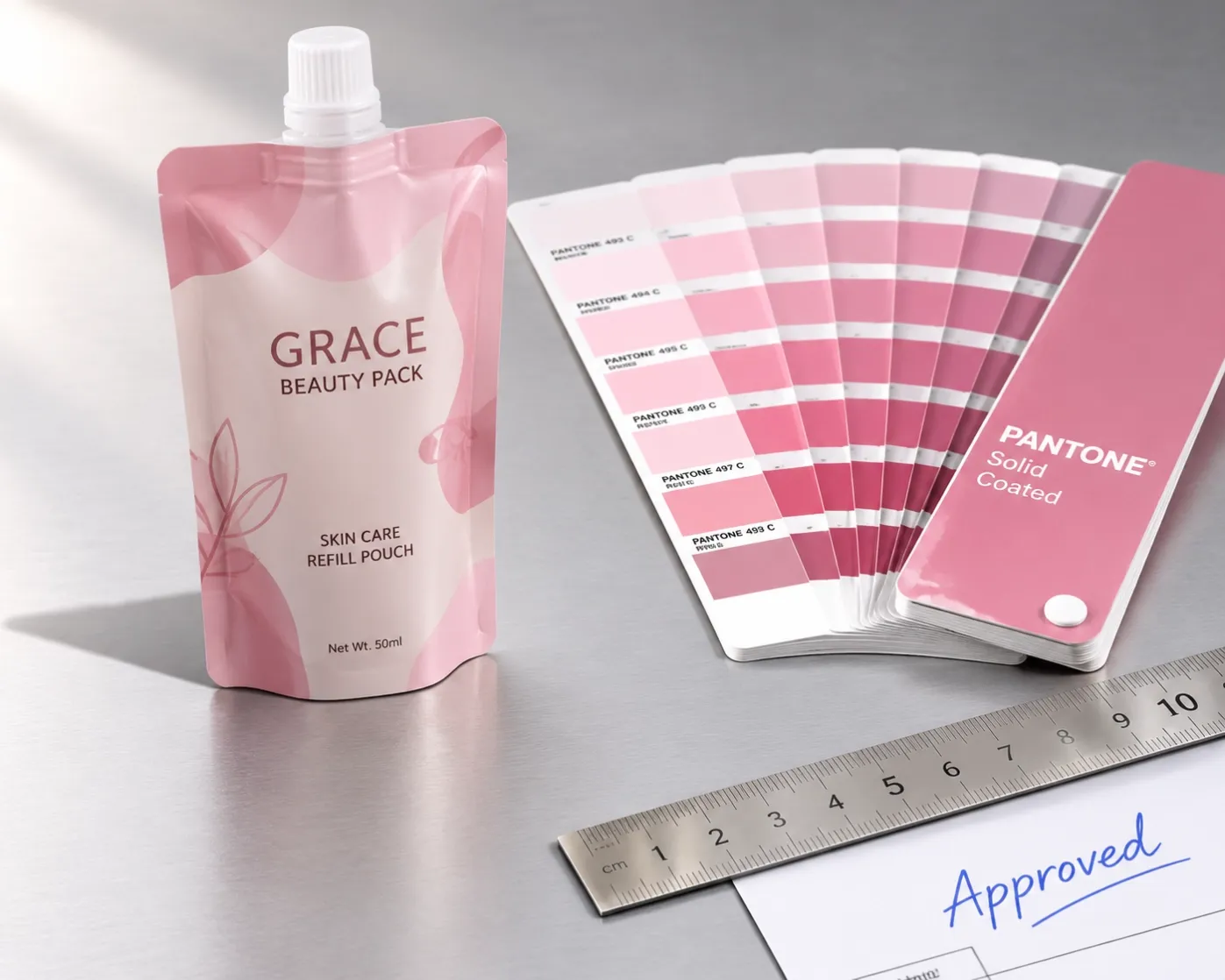
- Approve the artwork and run the batch.
What to send
Product type, fill volume, target quantity, and the pack the customer currently buys.
- MOQ — 50,000 pcs per design, confirmed against pouch size
- Trial batch — 1,000 pcs on a single design
- Stock samples — free, you cover freight only
- Custom printed samples — 7–10 days
- Production — 15–20 days after deposit and artwork approval