Sep 15, 2026Custom Spout Pouch Guide
How to Choose the Right Spout Pouch Size for Your Product
Learn how to choose the right spout pouch size based on product volume, viscosity, spout type, storage, filling and customer usage.
How to Choose the Right Spout Pouch Size for Your Product
Choosing the right spout pouch size is important for product protection, dispensing performance, transportation and customer experience.
The right size depends on more than filling volume. Product viscosity, pouch dimensions, spout position, storage requirements and filling equipment should also be considered.
1. Start With the Product Filling Volume
The first step is to determine how much product the pouch needs to hold.
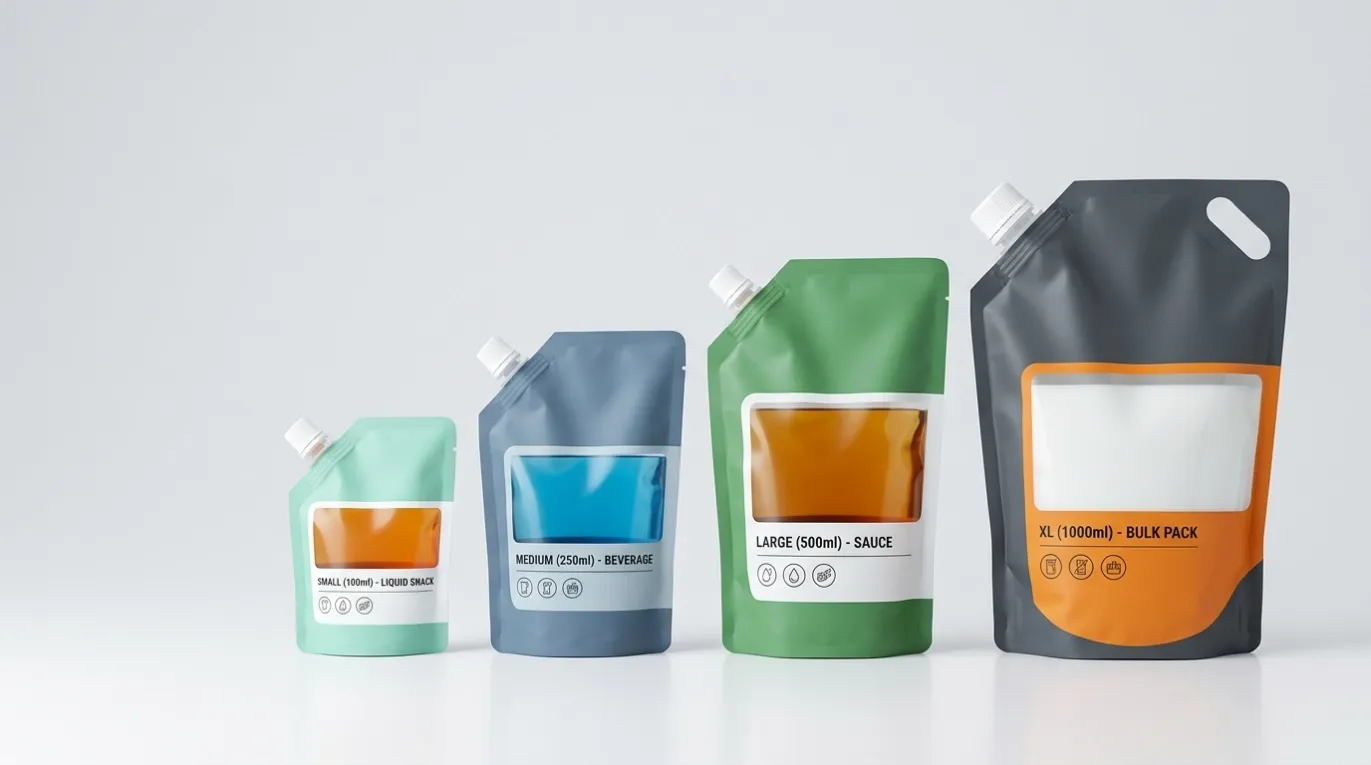
Common filling volumes may include:
- 50ml–100ml for travel and sample products
- 100ml–300ml for personal care products
- 300ml–500ml for shampoo, lotion and body wash
- 500ml–1L for refill products
- 1L or more for household and commercial applications
The actual pouch dimensions should be developed according to the required filling volume rather than choosing a standard size only by capacity.
2. Consider Product Viscosity
Product viscosity affects both pouch dimensions and spout selection.
Thin liquids such as toner or liquid cleaners may work with a smaller spout opening.
Thicker products such as lotion, shampoo, body wash and sauces may require a larger spout for smoother dispensing.
Before mass production, the finished product should be tested with the selected pouch and spout.
3. Choose the Right Pouch Dimensions
Capacity alone does not determine the final pouch size.
Important dimensions include:
- Pouch width
- Pouch height
- Bottom gusset
- Spout position
- Spout diameter
- Filled-pouch shape
A taller pouch may provide a different shelf appearance from a wider pouch, even when both hold a similar volume.
Brands should also consider how the filled pouch will be stored, displayed and handled.
4. Match the Size to the Application
Different products require different pouch sizes.
Skincare and Cosmetics
Smaller formats can work well for lotion, cleanser, toner, serum and travel products.
Shampoo and Hair Care
Medium-size pouches are suitable for shampoo, conditioner and hair treatments, especially refill products.
Body Wash and Personal Care
Body wash and shower gel can use medium-size pouches designed for convenient bathroom dispensing.
Home Care
Laundry detergent, dish soap and household cleaners may require larger capacities and stronger pouch structures.
Food and Sauces
Ketchup, mayonnaise and sauces require pouch dimensions and spout openings that match product viscosity and dispensing requirements.
5. Think About Refill Packaging
Refill products often require a different pouch size from the original retail package.
A refill pouch should be easy to store, carry and pour into the reusable container.
For example, a brand may offer a smaller pouch for travel or trial use and a larger pouch for regular home refills.
6. Consider Spout Position and Cap Type
Spout position can affect how easily customers hold and pour the pouch.
Common options include:
- Top-center spout
- Top-side spout
- Corner spout
- Different spout diameters
- Screw cap
- Flip cap
The best configuration depends on product viscosity, pouch size and how the customer will dispense the product.
7. Consider Filling and Transportation
The pouch must also work with the production process.
Before confirming the final size, brands should consider:
- Filling equipment
- Filling speed
- Seal requirements
- Product weight
- Transportation conditions
- Carton packing
- Warehouse storage
A pouch that looks suitable on a drawing may still require adjustments after filling and transportation testing.
8. Choose the Material Together With the Size
Pouch size and material structure should be considered together.
Larger pouches may require higher strength, while products sensitive to oxygen, moisture or light may require additional barrier protection.
Common structures include PET/PE, PET/AL/PE, PET/AL/PA/PE and Mono-PE.
9. Request a Custom Spout Pouch Size
There is no single pouch size that works for every product.
To develop the right size, provide your packaging supplier with:
- Product type
- Filling volume
- Product viscosity
- Desired pouch dimensions
- Spout diameter
- Cap preference
- Material requirements
- Printing requirements
- Estimated order quantity
Grace Beauty Pack can develop custom spout pouch sizes based on your product and packaging requirements.
10. Get a Custom Spout Pouch Quote
If you are not sure which pouch size is suitable for your product, send us the product type, target volume and estimated order quantity.
We can help evaluate the pouch size, material, spout and customization options for your application.