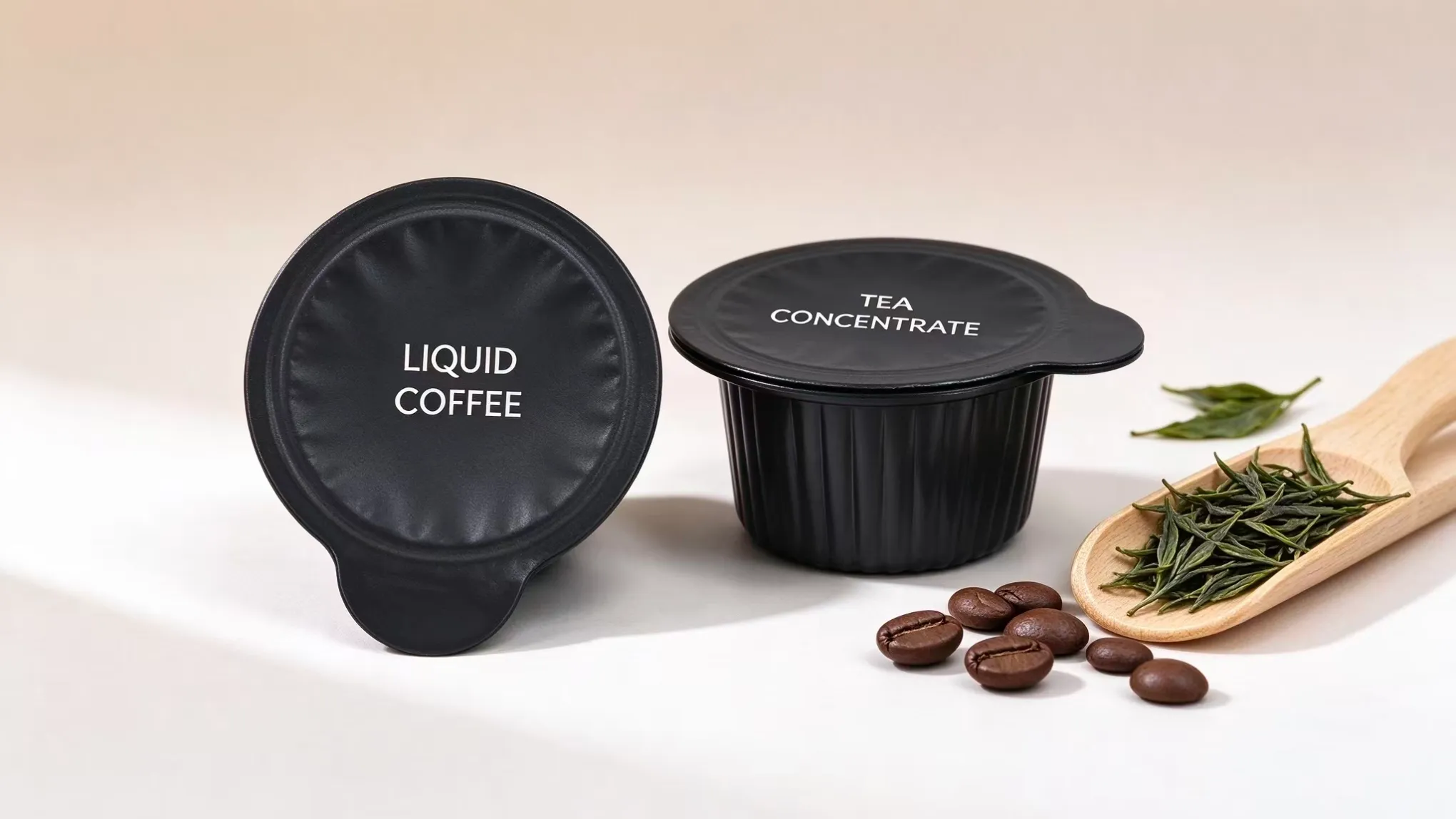
Custom High Barrier Liquid Coffee & Tea Concentrate Container
A concentrate is not sold by volume, it is sold by cups. One 30 ml portion makes one cup, so the container is sized by how many cups the customer wants in the pack — and every other decision follows from that number.
These are PP high-barrier portion containers from 15 ml to 60 ml for liquid coffee concentrate, cold brew concentrate and tea concentrate, sealed with a printed lid. MOQ is 1,000,000 pcs per size.
The minimum is set by the tool, not by the order
These containers are moulded in a high-cavity tool, and the tool is the cost — not the plastic. A single-cavity press would make a 30 ml cup at a price no concentrate brand could carry; a multi-cavity tool spreads that cost across a very large run, which is why the unit price at a million pieces is a fraction of the price at fifty thousand.
That tooling also fixes the minimum: 1,000,000 pcs per size on this line, and it does not move for a first order. Capacity is a separate question and it is fully custom — the cup is built to the portion you need.
What replaces a trial batch is a sample: cups, lids and the actual fill volume are sent before the run, so the portion can be held and measured rather than imagined. It is the only sensible way to commit to a million pieces.
A concentrate is the hardest thing to keep tasting right
Concentrating coffee concentrates its problems. Aromatics that were stable in a dilute drink become volatile and reactive at ten times the solids, and oxygen is the enemy: a small headspace with a poor barrier will flatten the top note within weeks, and a flattened concentrate tastes like instant rather than like coffee.
That is what the barrier is for. PP alone is a modest oxygen barrier; an EVOH layer inside the wall, or a foil lid, is what holds the aroma for a shelf life measured in months rather than weeks.
The cup is small, so the fill matters more
At 15–60 ml, a few tenths of a millilitre of headspace is a large proportion of the pack. Too much air and the product oxidises; too little and the fill line is unstable at speed, which shows up as leaking lids rather than as a fill problem.
It is worth settling the headspace with the filler before the lid artwork, because the fill window is narrower on a portion cup than on any pouch.
Tea and coffee are two different processes
Coffee concentrate is low-acid, so it needs a process that controls Clostridium rather than relying on pH — retort or aseptic. Tea concentrate usually sits at a lower pH and can go through a hot fill, which is a simpler and cheaper route.
They can share a container and a lid; they cannot share a process. If a range includes both, say so at quotation, because the process decides the lid structure as well as the line.
Portion format, portion price
The format exists because a single-serve cup carries a price premium that a bottle cannot: it is dosed, it is sealed, and it needs no measuring. That premium is also its limit — the container has to feel like a portion of something expensive, not like a ketchup sachet.
In practice that means a printed lid with the brand at full strength, a cup wall thick enough not to flex, and a foil that peels cleanly in one movement rather than tearing.
What to send for a quotation
- the concentrate ratio, and how many cups one portion should make
- coffee, tea, or both — the process differs
- the shelf life and the storage condition
- whether the pack is sold singly or in a multi-cup carton
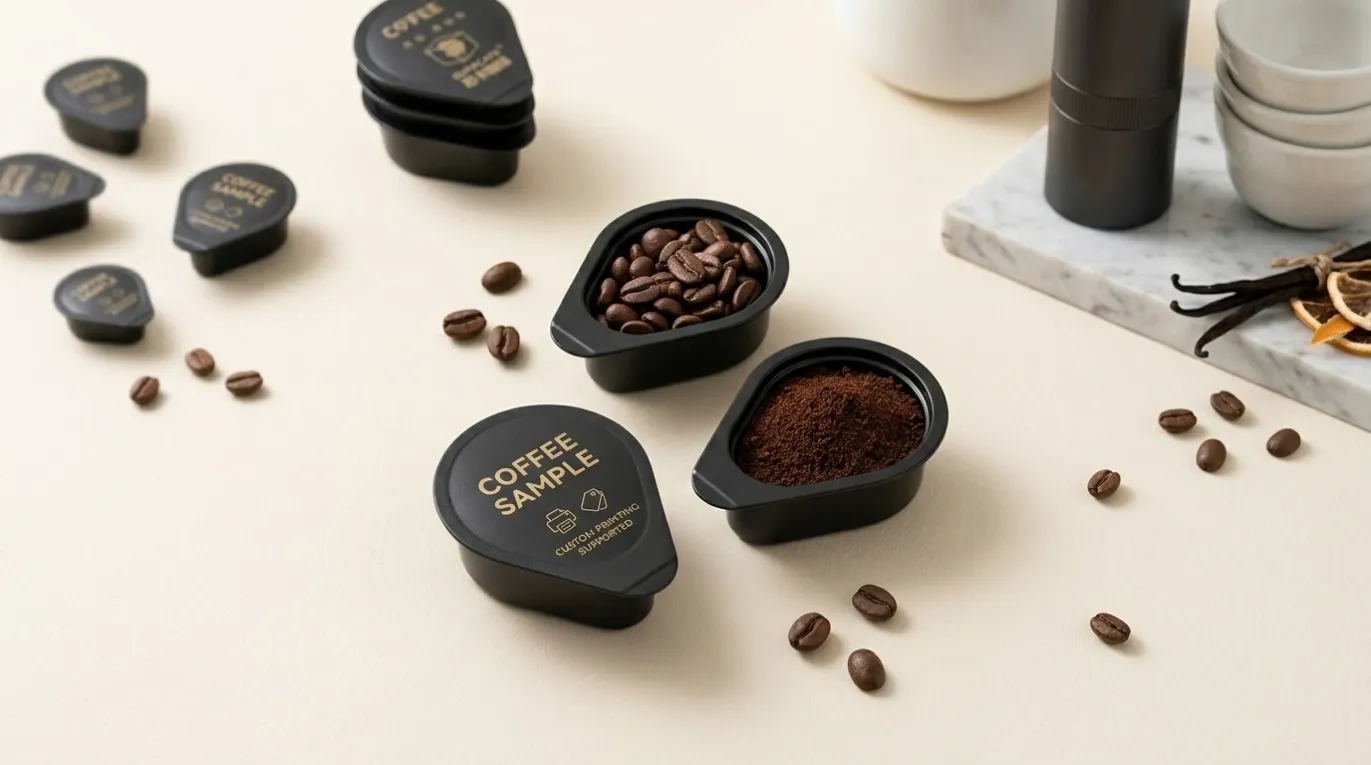
The lid carries most of the brand, so artwork questions usually start there. The pouch line handles larger liquid formats — see coffee sample containers for the dry version.
FAQ
Why is the MOQ a million?
Because the tool is multi-cavity and the tool is the cost, so the minimum follows the tool rather than the order. It does not move for a first order — what is customised is the capacity and the lid.
Is there a trial batch?
No. Samples are sent instead, so appearance and capacity can be checked before the run. That is the trade for the low unit price at this volume.
Can one container hold coffee and tea concentrate?
The container, yes. The process, no — coffee is low-acid and needs retort or aseptic, tea can usually be hot filled.
Get a quotation
Send the concentrate ratio, the cups per portion and the process, and the reply names the barrier, the lid and the fill window. Send your specification.