Custom Coffee Sample Container
A coffee sample has one job: to taste like the coffee. Everything the pack has to do — hold the aroma in, keep moisture out, and survive being posted — is in service of a cup that is brewed weeks after the roast.
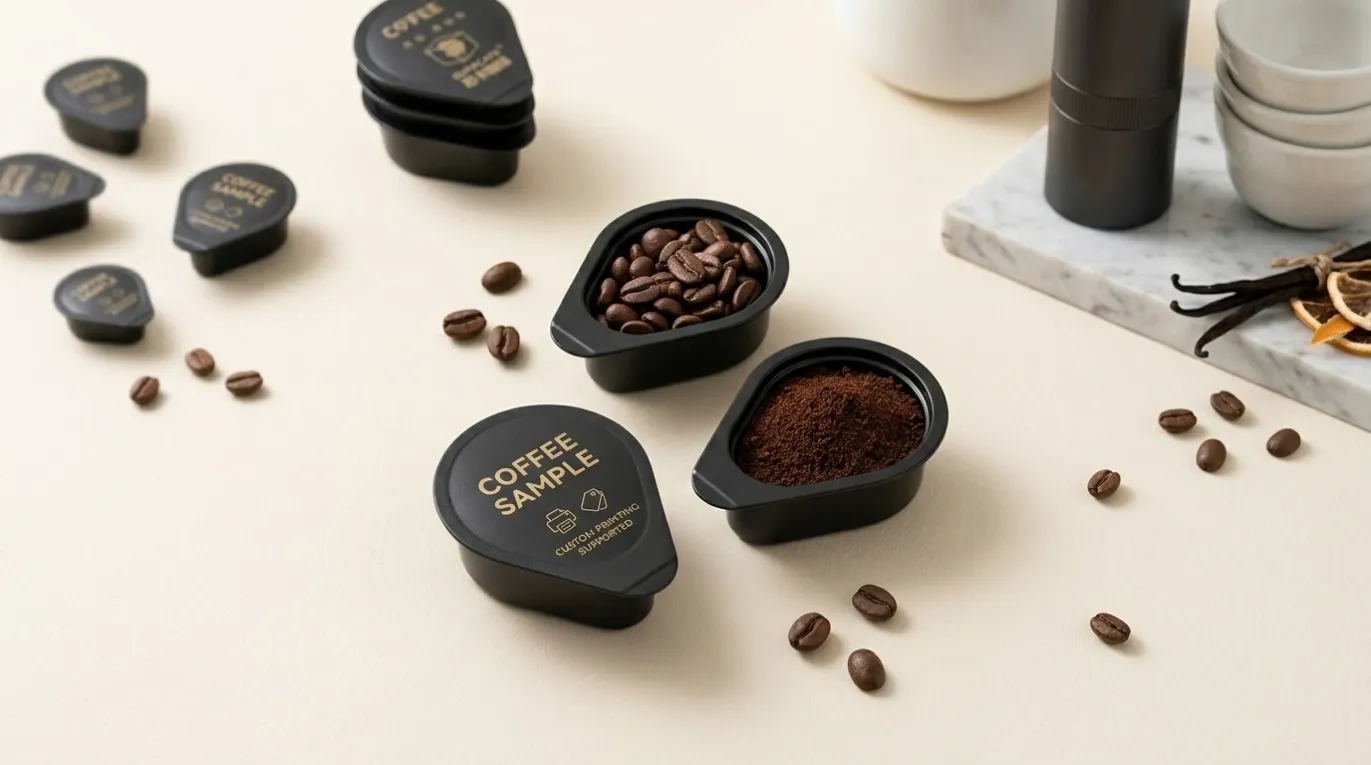
These are PP high-barrier portion containers from 10 g to 50 g for ground and roasted coffee samples, sealed with a printed lid. MOQ is 1,000,000 pcs per size.
Fresh roast is still releasing gas
Coffee beans release carbon dioxide for days after roasting, and ground coffee releases it faster because there is far more surface. Seal a portion while that is still happening and the pack swells, the lid domes, and in the worst case the seal lifts at a corner.
There are only two answers: rest the product before filling, or give the pack somewhere for the gas to go. For a small rigid portion the first is usually right — the alternative is a valve in a 30 g cup, which is a cost and a mould change. What matters is that the filling date is set from the roast curve rather than from the calendar.
Oxygen takes the top note first
Staling in coffee is mostly oxidation, and it shows up as a loss of the aromatic top note long before anyone would call the coffee stale. A sample that has lost its top note is worse than no sample: it teaches the buyer what your coffee tastes like when it is tired.
PP alone is a modest oxygen barrier. An EVOH layer in the wall, or a foil lid, is what carries a sample through a trade show season. For brands that want an aluminium-free pack, the barrier has to come from the polymer side — that trade is covered in coffee sample containers: high-barrier PP, no aluminium.
Moisture, and the second enemy
Moisture moves the other way: it gets in from humid air and flattens the acidity. In a small portion the surface-to-volume ratio is high, so a modest moisture gain is a large change in the cup.
Practically, this is the argument for a foil lid on anything that ships to a humid market, and for a lid that peels cleanly — a lid that tears leaves the buyer picking at foil instead of brewing.
The size is set by brews, not by grams
A sample is sized by how many cups it makes: one cup for a single-origin taster, two or three for a filter sample, a dozen for a retail trial pack. Choosing the gram weight from the cup count rather than from the container range keeps the pack honest — a 10 g cup that claims four cups is a disappointed customer.
It also fixes the fill line. A portion cup filled to 80% looks generous; filled to 95% it looks like it is about to burst its lid, and it usually is.
Mass production is what makes the sample cheap
These containers are moulded in a high-cavity tool, and the tool is the cost rather than the plastic — which is why MOQ is 1,000,000 pcs per size and why the unit price at that volume is a fraction of a short run. The minimum follows the tool and does not move for a first order; what is custom is the capacity, the lid and the print.
There is no trial batch on this line. Samples are sent instead, so appearance and the actual fill volume can be checked before the run is committed.
For a sampling programme that is the right economics: samples are given away, so the pack cost per unit is the whole budget — and at this volume that cost is low precisely because the tool is amortised.
What to send for a quotation
- the gram weight, and the cups it should brew
- ground or whole bean
- roast-to-fill interval, and whether the product can be rested
- the destination market, and whether aluminium-free is a requirement
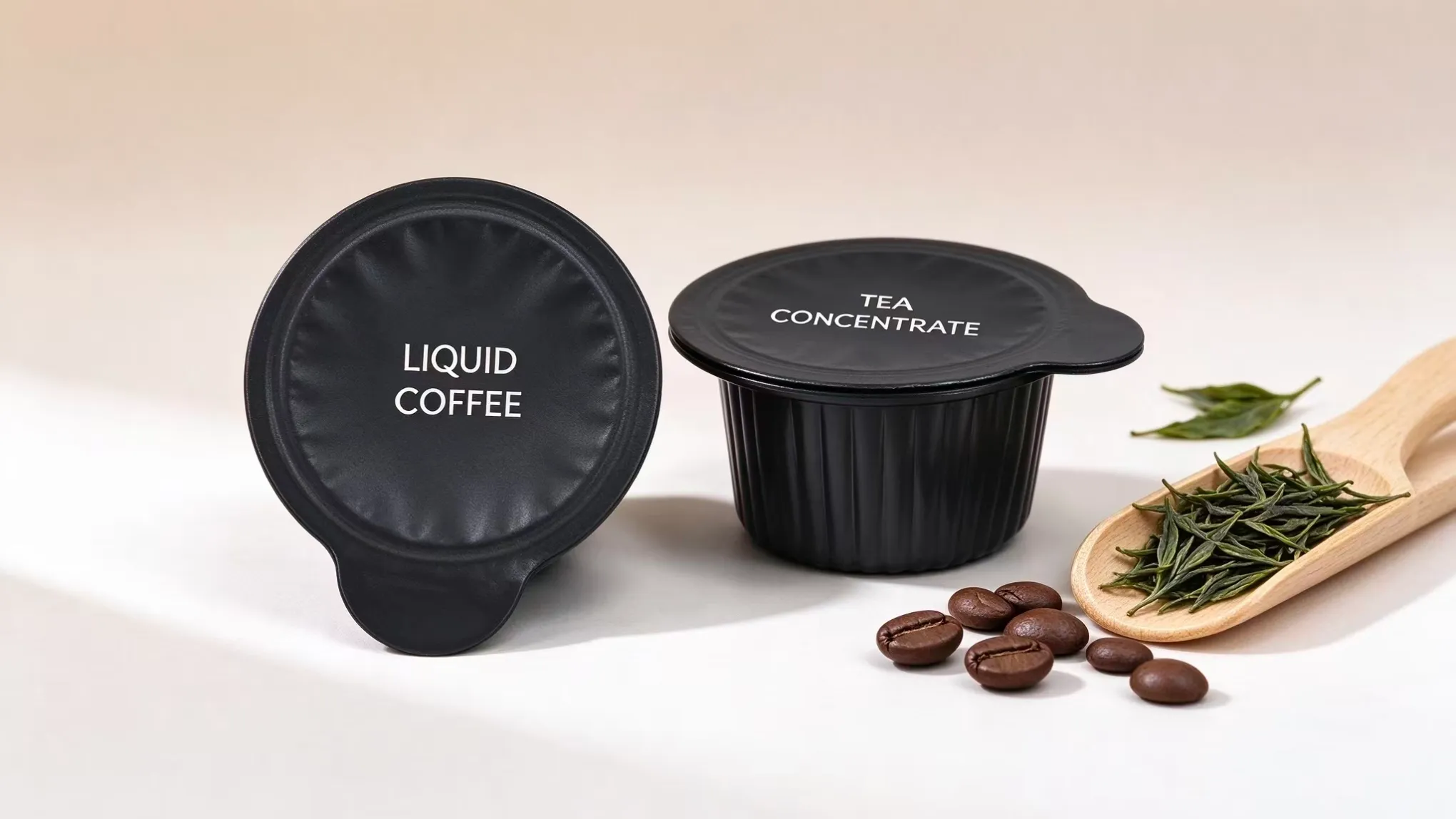
The liquid version of this format is on high barrier liquid coffee & tea concentrate containers.
FAQ
Will the lid swell if the coffee is fresh?
It can, if the product is packed too soon after roasting. Either rest the coffee before filling or specify a pack that can vent — the first is usually the cheaper answer at this size.
Can the container be aluminium-free?
Yes, with an EVOH barrier in the wall. A foil lid is the stronger barrier, so an aluminium-free pack is a trade between recyclability and shelf life rather than a free upgrade.
How much coffee goes in a sample container?
Usually 10 g to 50 g, set by how many cups the sample should brew rather than by the container range.
Get a quotation
Send the gram weight, the brew count and the roast-to-fill interval, and the reply names the barrier, the lid and the fill line. Send your specification.