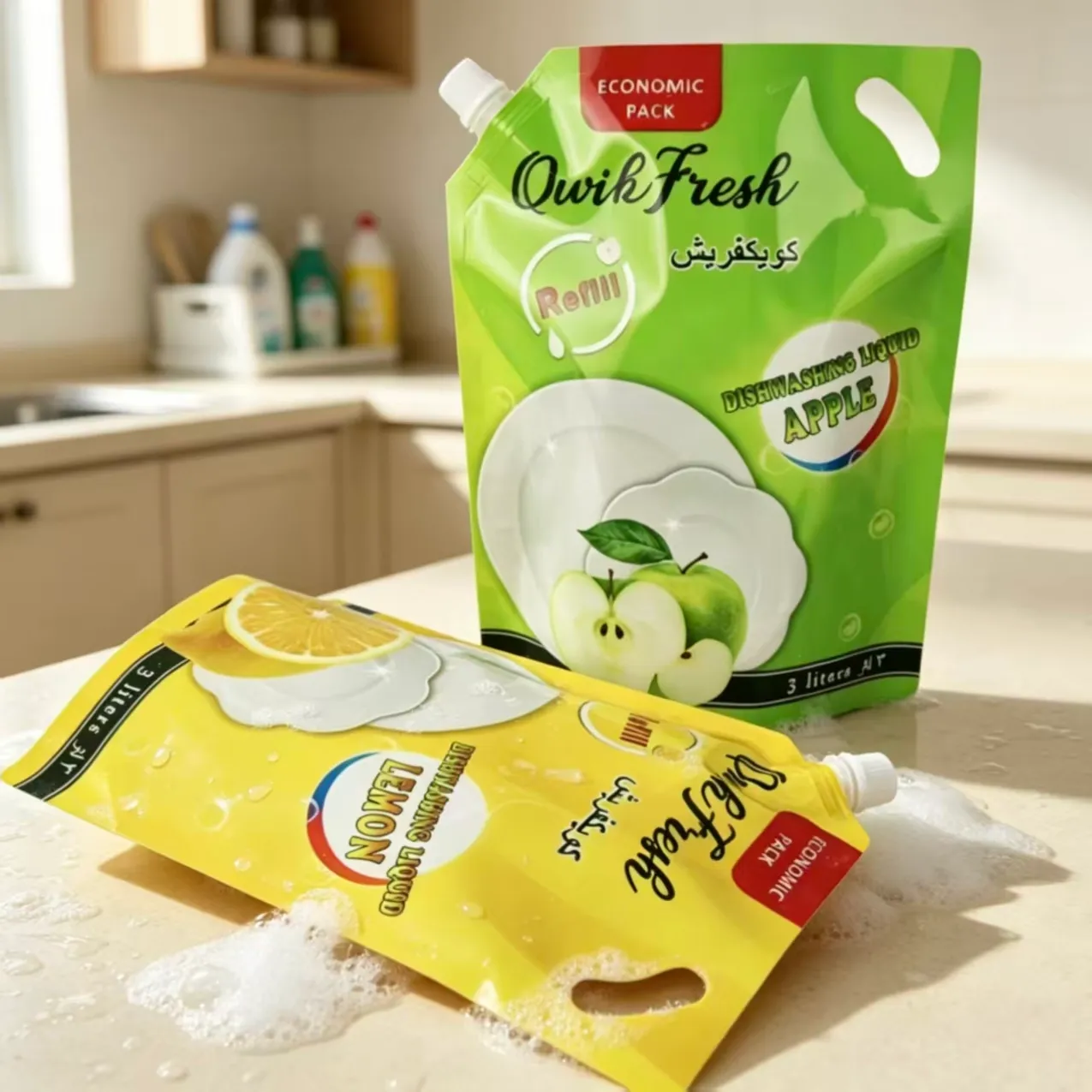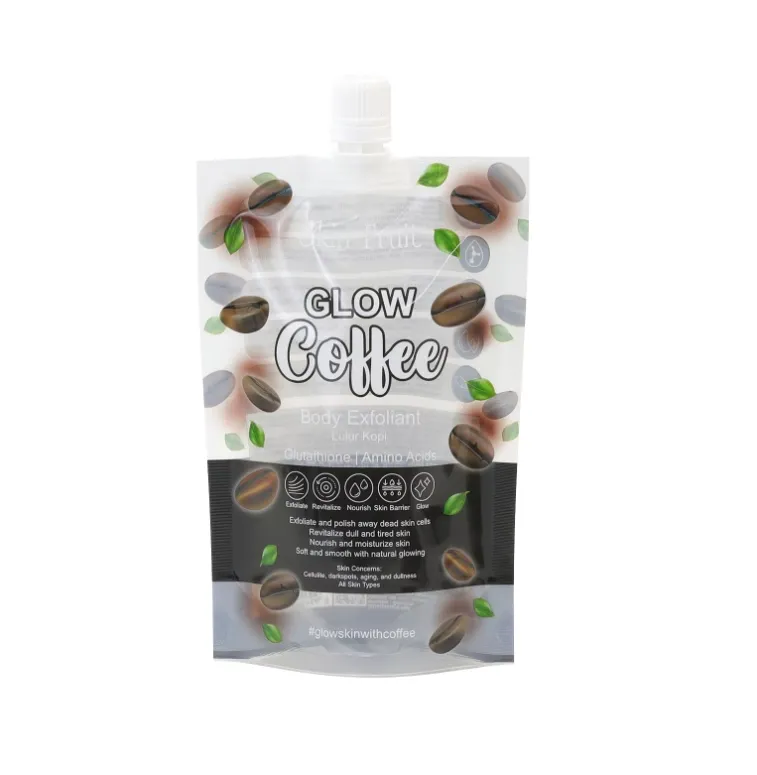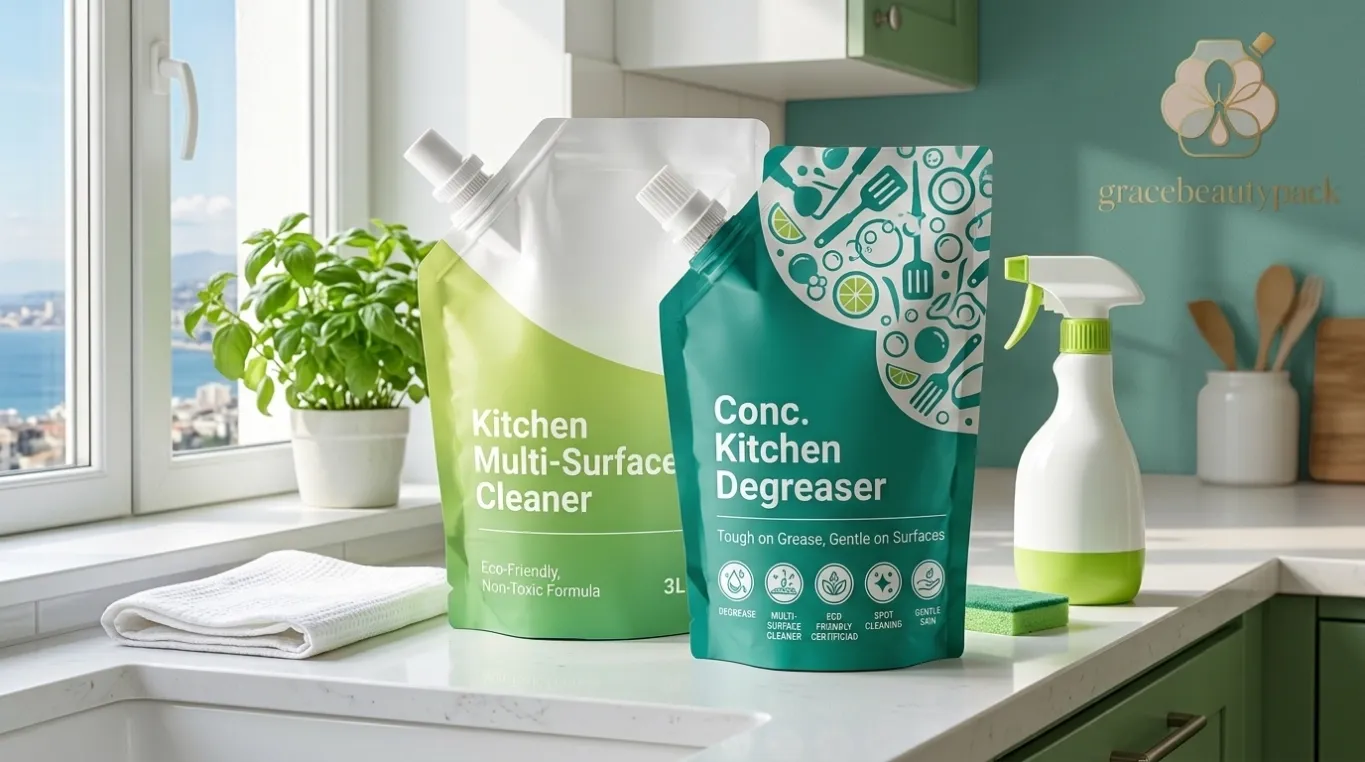
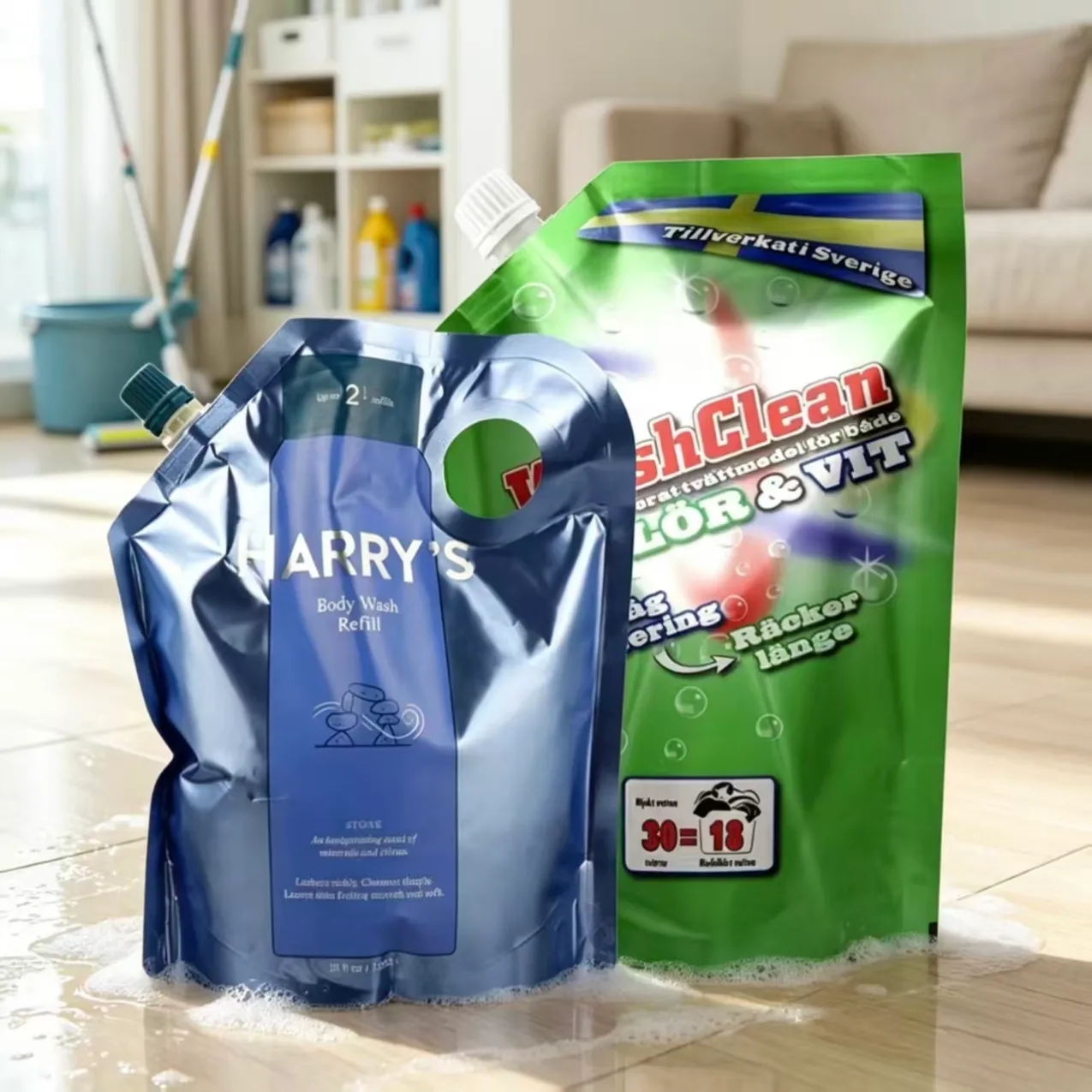
Custom Floor Cleaner Refill Spout Pouch for Home Care
Refill pouches for floor cleaner concentrate, with a cap that measures a bucket dose and a base that survives a wet floor. MOQ 50,000 pcs per size.
Specifications
- Product Type
- Floor cleaner refill pouch
- Application
- Floor cleaner, tile and laminate cleaner, disinfectant concentrate
- Capacity
- 500 ml – 2 L (custom)
- Pouch Type
- Stand-up spout pouch, wide base
- Material
- PET/PE · mono-PE
- Spout
- Bore sized for a 20–50 ml dose
- Cap
- Screw cap with measuring lines
- Printing
- Gravure, customer-supplied artwork
- Finish
- Matte / glossy
- MOQ
- 50,000 pcs per size
- Trial
- 1,000 pcs, one design
- Samples
- Free stock samples; printed samples 7–10 days
- Production
- 15–20 days after deposit and artwork approval
- Certification
- ISO 9001, ISO 22000
Floor Cleaner Refill Spout Pouch
Floor cleaner is dosed into a bucket, not onto a cloth. That one difference moves the design away from precision and towards flow: the customer wants a capful in the water in two seconds, with a mop already in the other hand.
These are stand-up spout pouches from 500 ml to 2 L for floor cleaner concentrate, printed with your artwork, with a cap that measures a bucket dose. Bulk MOQ is 50,000 pcs per size, with a 1,000-pc trial.
A bucket dose is 20 to 50 ml, and it has to come out fast
Compare the two home care briefs. A multi surface spray takes a small, careful dose into a 500 ml bottle, so a narrow bore and a slow pour are an advantage. A floor cleaner takes a much larger dose into five litres of water, and the customer is standing at a tap, not sitting at a table.
That points to a wider bore and a cap with a visible measuring line, because the cap is doing the dosing here rather than a printed table. Get the bore too narrow and the pour takes twenty seconds and the customer stops measuring — which is the failure that shows up as a complaint about strength rather than about packaging.
One hand, with a mop in the other
This pack is opened by someone who is already holding something. A flip cap that opens with a thumb is the practical choice; a screw cap that needs two hands is the one that ends up left open on the floor.
It is also a pack that gets put down mid-use, often on a wet floor with the cap loose. That is the scenario to test: fill it, open it, lay it on its side for a minute, and see what comes out of the spout when it is picked up again. A pouch that dribbles at that moment is the one that gets reviewed badly.
It lives on a wet floor
Floor cleaner is the one home care pouch that spends time in standing water. Two consequences that are easy to miss at the artwork stage.
The base takes the wear: a wide gusset that stands well on a dry shelf also sits in whatever is on the floor, and the print on the bottom third is the first to scuff. Keep heavy coverage off the base, the same advice that applies to any pouch that is handled wet.
The second is standing stability at the end of the pack. A two litre pouch with a third left is the least stable version of itself, and that is when it is left on the floor rather than picked up. Test the shape half full, not full — it is the same reason large formats need a wider base, covered in home care refill pouches.
Concentrate economics
A concentrate that dilutes into a bucket is the format with the clearest refill argument: the pack ships the active ingredients and the customer supplies the water. Two litres of concentrate can make far more cleaning solution than two litres of ready-to-use product, which is why the pack stays small while the job gets bigger.
What that means commercially is that the pouch should be compared against the bottle it replaces per cleaning job, not per litre. That comparison is also the one a buyer will make, so it is worth having the answer ready in the quotation.
MOQ, samples and the first run
Bulk MOQ is 50,000 pcs per size, and each capacity is its own size — 1 L and 2 L in the same print are two minimums. A 1,000-pc trial is available before a full run.
Stock samples ship free. Printed samples take 7–10 days; production runs 15–20 days from artwork approval and deposit. Ask for a filled sample if the dose accuracy matters to your formula, because a 20 ml difference matters more on a concentrated product than on a mild one.
What to send for a quotation
- the dose per bucket, and whether the cap is the measure
- the dilution ratio, and whether the pack carries a hazard classification
- the capacity and how the pack is stored between uses
- artwork status, and whether a recycling claim is planned
Those four settle the bore, the cap and the structure. The wider specification questions — film, print, sealing — are set out in spout pouch specifications for quotation.
FAQ
Why is the bore wider than on a spray refill?
Because the dose is larger. A bucket takes twenty to fifty millilitres at once, and a narrow bore makes that slow enough that customers stop measuring. The bore follows the dose, not the category.
Does a two litre pouch stand up when it is half empty?
It stands, but it is less stable than a full one, and that is the state it is in when it is left on the floor. Ask for the base width to be checked at the target fill weight half full, and confirm the gusset is wide enough for the shape you want.
Can the cap be child-resistant as well as a measure?
Those two functions pull in opposite directions — a measuring cap is meant to be easy to open, a child-resistant closure is meant not to be. If the formula carries a hazard classification, the closure decision follows that first, and the measuring line moves to a separate cup.
Get a quotation
Send the dose, the dilution ratio and the capacity, and the reply is a bore and a cap rather than a range. Send your specification and we will answer in one message.